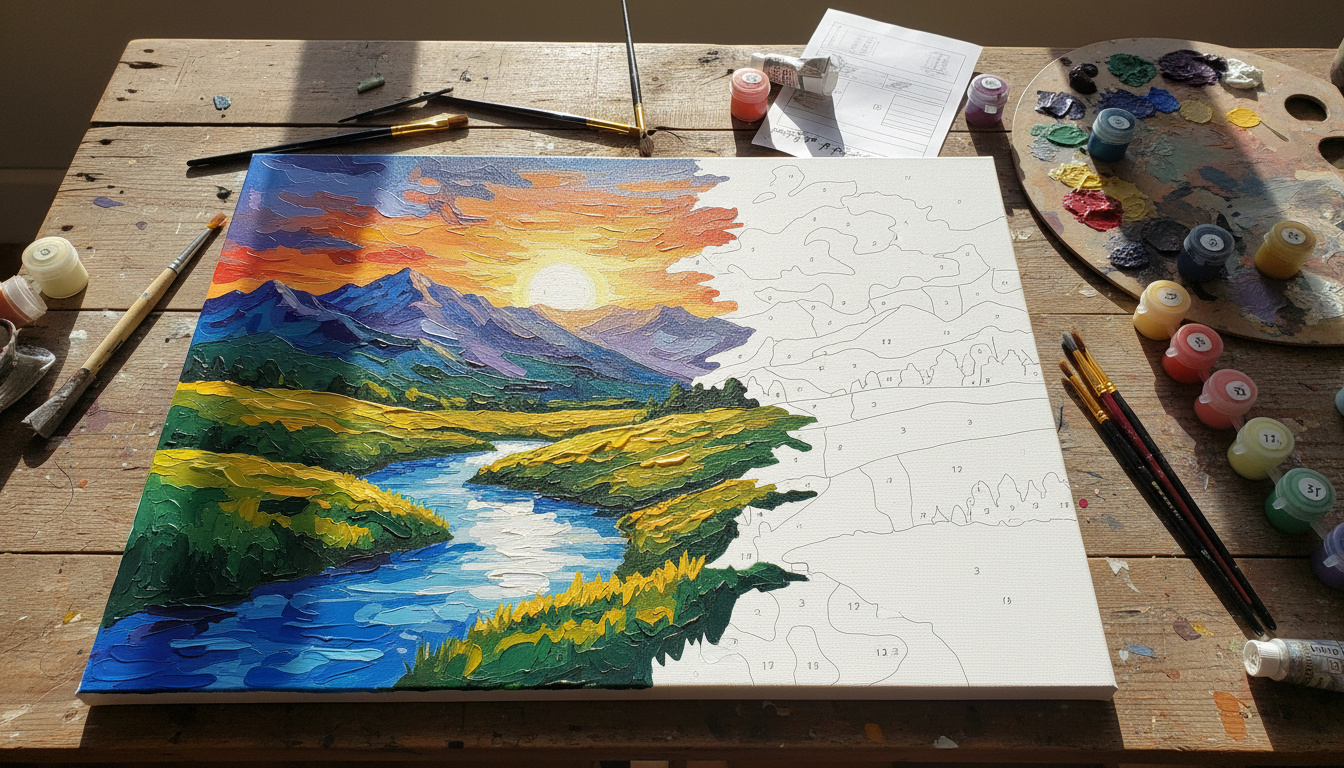

Colour by number refers to a guided artistic method where canvases or pages display enumerated sections corresponding to specific paint hues. Participants match each numeral to its designated colour, filling segmented areas until a cohesive image emerges without requiring formal training or innate talent.
Commercially introduced in the early 1950s as a democratic alternative to formal art education, the practice allowed post-war households to produce framed masterpieces. After decades of fluctuating popularity, contemporary adults now revisit the activity through sophisticated kits and digital platforms seeking mindfulness-based stress relief.
What Is Colour by Number?
The system operates through a simple correspondence: pre-printed outlines divided into small, numbered zones align with pots of pre-mixed paint carrying identical numerals. Canadian historical records note that British English speakers typically employ “colour by number,” while American markets favor “paint by numbers” or “color by number,” though the mechanics remain identical across regions.
Numbered sections filled with matching pre-mixed colours to complete an image.
1950s Detroit-based paint company seeking to sell more product.
Physical canvas kits, printable worksheets, and touchscreen applications.
Relaxation, accessible creativity, and structured skill-building for all ages.
- Post-pandemic resurgence driven by adult mindfulness and anxiety-reduction trends.
- Available in both oil-based and acrylic formats with pre-mixed pigments.
- Artisan marketplaces offer custom-designed kits beyond standard landscapes.
- Diamond painting variants provide textured, gem-based alternatives to traditional paint.
- Smithsonian Institution mounted a 2001 exhibition recognizing the cultural phenomenon.
- Appeals to demographics from ages three through senior adulthood.
| Fact | Details |
|---|---|
| Inventor | Dan Robbins, commercial artist |
| Company Owner | Max S. Klein, Palmer Paint Company |
| Launch Year | 1951 (Craft Master brand) |
| First Kit | “Abstract No. 1” (cubist style) |
| Initial Price | $2.50 USD |
| Peak Production | 50,000 kits daily (1954) |
| Sales Milestone | 12 million kits sold by 1954 |
| Formats | Canvas kits, digital apps, PDF printables |
| Inspiration | Leonardo da Vinci’s numbered apprentice exercises |
| Spelling Variants | UK “colour” versus US “color” |
Historical documentation confirms that each kit traditionally contains a pre-printed canvas, numbered oil or acrylic paint pots, brushes, and instructional guides. Users typically work from largest numerical sections toward smaller details to minimize smudging.
How Do You Do Colour by Number?
Fundamental Technique
Begin by organizing the workspace and verifying that all numbered paint pots correspond to the canvas legends. Apply thin, even brush strokes within the lines, starting with the largest color blocks to establish base layers before progressing to intricate details.
Select simple landscapes such as the Matterhorn scene using pre-mixed paints to build confidence without mixing colours. Records from the 1950s indicate these realistic scenes sold millions of copies initially.
Allow each hue to dry completely before painting adjacent sections to prevent bleeding. Seal finished works with clear varnish if desired for longevity.
Technical Troubleshooting
Thick paints require stirring or thinning with appropriate mediums. Clean brushes immediately after use to prevent bristle damage. Replace dried paint pots through major craft suppliers.
Best Colour by Number Kits and Products
Adult-Focused Selections
Contemporary analysis indicates that adult kits feature detailed landscapes, portraits, and complex patterns designed for prolonged focus. These products emphasize therapeutic benefits including mindfulness and anxiety reduction through repetitive, structured activity.
Diamond painting variants represent a modern evolution, utilizing small resin gems rather than liquid pigment to create textured, sparkling finishes.
Children’s Options
Pediatric formulations offer larger numerical sections and simpler imagery suited for developing motor skills. These kits often employ acrylic paints for easier washability.
Retail Availability
High-rated adult kits circulate through Amazon storefronts, while Etsy artisans provide custom-designed canvases from personal photographs. Michaels stores stock replacement brushes and supplementary paints.
Clean brushes immediately after use to prevent damage. Replace dried paint pots through craft suppliers.
Free Colour by Number Resources and Apps
Printable Worksheets
Numerous websites distribute downloadable PDF colour-by-number sheets requiring only household printers and crayons or markers. These resources suit educational environments and travel activities.
British markets use “colour by number” while American packaging favors “color by numbers.” Both describe identical products.
Digital Applications
Software developers have digitized the experience, offering touchscreen canvases where users tap to fill numbered sections. These applications eliminate physical cleanup and accommodate infinite colour variations.
For readers interested in historical craft traditions, see Happy Valentine’s Day – History, Origins and Traditions.
Timeline of Paint by Numbers Popularity
- : Dan Robbins conceives the concept and prototypes “Abstract No. 1.” Smithsonian records document this development phase.
- : Commercial launch under Craft Master brand with cubist and landscape designs retailing at $2.50.
- : Palmer Paint Company sells an estimated 12 million kits while producing 50,000 units daily.
- : Peak craze reaches 20 million units sold nationwide, including White House staff distribution during Eisenhower administration.
- : Market saturation leads to declining sales and cultural criticism regarding conformity.
- : Smithsonian Institution mounts exhibition recognizing the phenomenon’s cultural impact.
- : Digital revival via applications and post-pandemic stress relief marketing.
Verified Facts and Persistent Uncertainties
| Established Information | Information Remaining Unclear |
|---|---|
| Dan Robbins invented the system in 1950 for Palmer Paint Company. | Exact global sales figures between 1951 and 1960 vary between 12 and 20 million units. |
| Therapeutic benefits include mindfulness and anxiety reduction. | Specific names of bestselling digital applications remain undocumented in available research. |
| 2001 Smithsonian exhibition confirmed cultural significance. | Comprehensive international market penetration data beyond North America and UK/US spelling variants. |
| Products available through Amazon, Etsy, and Michaels. | Precise chemical formulations of original 1950s paints versus modern equivalents. |
Cultural Context and Modern Resurgence
The activity emerged amid post-World War II prosperity and suburban DIY culture, offering leisure without requiring expensive art school training. Critics initially dismissed the kits as conformist and uncreative, yet contemporary rehabilitation recognizes the meditative value of structured creativity.
Compared to pottery or knitting, colour by number presents less physical mess and lower skill barriers while delivering tangible completion satisfaction. Art historical analysis notes the practice served as a gateway to genuine artistic pursuit for many mid-century participants.
Understanding material details matters in many technical hobbies, similar to identifying What Does Asbestos Look Like – Colors, Textures and Safe Identification.
Creator Perspectives and Historical Documentation
Every man a Rembrandt!
— Max S. Klein, Palmer Paint Company owner, 1950s marketing slogan (PaintVibe historical archives)
I never claimed it created real artists. It provided the experience of art.
— Dan Robbins, inventor, regarding the kits’ purpose (Smithsonian obituary video, 2019)
Final Considerations on Colour by Number
Colour by number persists as a accessible entry point to visual creativity, bridging 1950s commercial ingenuity with contemporary wellness trends. Whether through physical canvas kits, printable sheets, or digital applications, the practice offers structured artistic engagement without technical prerequisites.
Common Questions
Can colour by number help with anxiety?
Yes. The repetitive focus on matching numbers to colours produces mindfulness effects similar to adult coloring books, reducing stress through structured, low-stakes activity.
What paints work best for these kits?
Traditional kits provide pre-mixed oil or acrylic paints numbered to match the canvas. Stir thick paints before use and thin with medium if necessary.
Are dedicated colour by number books available?
Yes. Publishers compile historical pattern books and standalone worksheet collections available through book retailers and craft stores.
How should I handle dried paint pots?
Replace completely dried pots through craft suppliers like Amazon, Etsy, or Michaels. Attempting to rehydrate oil paints rarely restores usable consistency.
Is this activity suitable for absolute beginners?
Absolutely. The numbered system requires no prior painting experience, making it ideal for children and adults seeking creative entry points.
What distinguishes oil from acrylic kits?
Oil kits offer traditional blending properties but require longer drying times and solvent cleanup. Acrylics dry faster and wash with water.
Can finished works receive professional framing?
Yes. Completed canvases withstand standard framing techniques. Seal with varnish before framing to protect the painted surface.
Related stories

Liam O'Brien covers Australian politics and public affairs for Australia Focus.