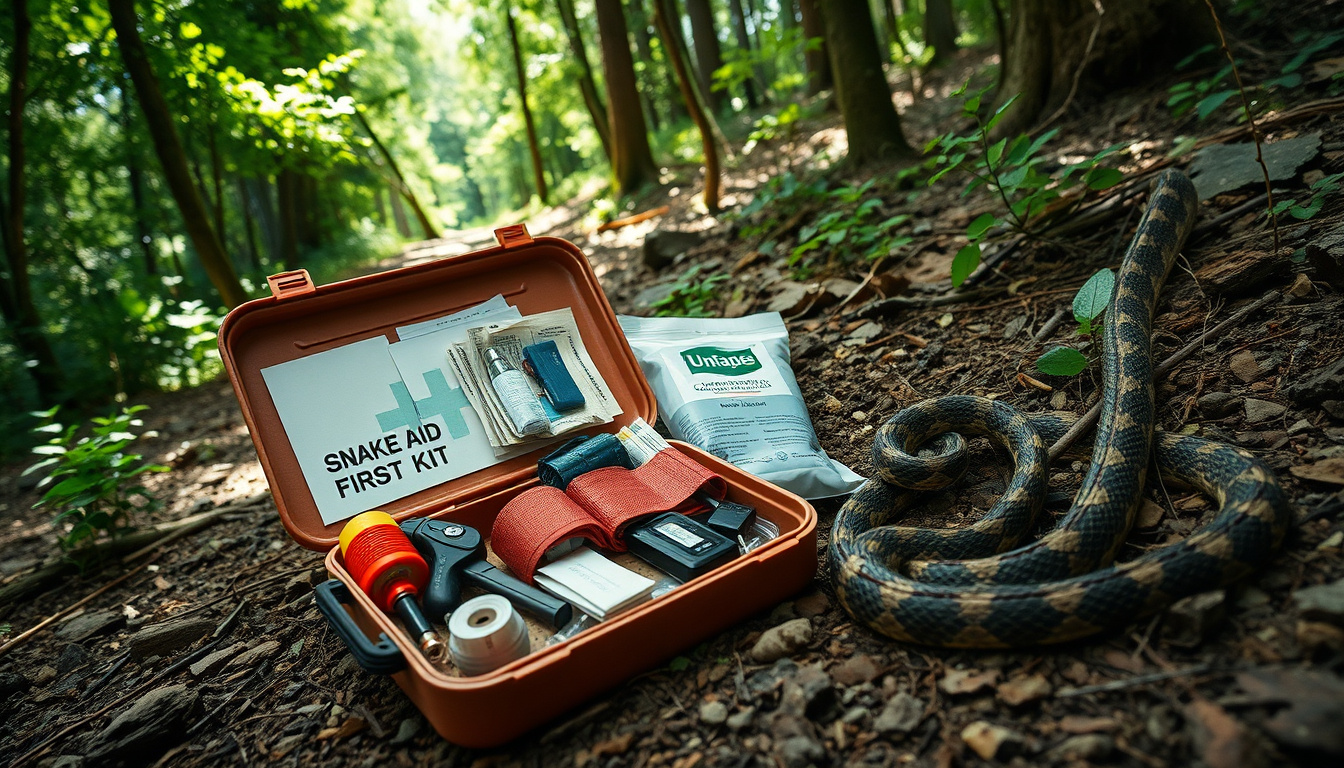
If you’ve ever backpacked into rattlesnake country or hiked a trail in the Australian outback, you’ve probably seen those little plastic snake bite kits sold at every outdoor retailer. The marketing sounds reassuring. But here’s what most buyers don’t find out until it’s too late: three independent peer-reviewed studies all reach the same conclusion — the most popular suction devices do not remove meaningful venom, and they could make things worse.
Venom Extractors Effective?: No · Key First Aid Item: Compression Bandage · Expert Advice Source: Snakebite Foundation · Commercial Kits Focus: Suction Devices · Reddit Consensus: Placebo Effect
Quick snapshot
- Suction devices fail per experts (SERB Insights)
- Compression bandage is the proven method (Snakebite Foundation)
- Home test reliability varies by region
- Extractor harm rate in real-world cases undocumented
- Researchers have shown extractors do not work for over 60 years (SERB Insights)
- Bad first aid advice has circulated for 500 years (Snakebite Foundation)
- Get to hospital quickly without extractors
- Carry a compression bandage instead
The table below summarizes key findings from clinical research and expert sources on snake bite kit effectiveness.
| Claim | Evidence |
|---|---|
| Work for Venom Removal? | No |
| Proven Method | Pressure Bandage |
| Antivenom Included? | Never |
| Top Criticism Source | Snakebite Foundation |
| Sawyer Extraction Rate | 1/10,000th rattlesnake venom |
| Studies Confirming Failure | Nearly 36 clinical studies |
| Expert Practitioners Interviewed | 15 practitioners |
| Years Ineffectiveness Known | 60+ years |
Do snake bite kits actually work?
The short answer is no — and the evidence is not new. Researchers have known for over 60 years that suction-based snake bite kits do not remove meaningful amounts of venom from a wound. A BTG Specialty Pharmaceuticals report examined nearly 36 clinical studies, editorials, and guidelines, interviewing 15 expert practitioners, and found consistent evidence: venom extractors provide no clinical benefit.
Suction Devices in Kits
Most commercial snake bite kits centre on a suction device — a plastic cup with a plunger mechanism that claims to draw venom out through negative pressure. The Snakebite Foundation explains the problem in plain terms: venom diffuses into surrounding tissue within seconds of a bite, moving far faster than any suction can capture it. Studies show the Sawyer Extractor removes only 1/10,000th the concentration of rattlesnake venom — an amount so small it has no clinical effect. Meanwhile, the suction itself can collapse wound tracts and potentially force venom deeper into tissues.
The Sawyer Extractor Pump Kit — one of the most widely sold suction devices — is not effective for snake envenomation, according to peer-reviewed studies cited by Trailspace gear reviews.
Expert Consensus on Effectiveness
“Although each of these 3 studies was done independently of each other and using different methodology, they arrive at the same conclusion: the Extractor does not work, and it could make things worse.” — Sean P. Bush, MD, who authored one of the key studies on extractor failure.
The Wilderness Medical Society opposes the use of venom extractors. As of 2024, top medical organizations do not recommend extractors, tourniquets, or ice for snake bites, according to current medical guidance. Extractors may have limited usefulness for bee stings or spider bites, but not for snake envenomation.
What should be in a snake bite kit?
Despite the suction device being ineffective, a practical snake bite kit still has value — provided it contains the right components. The single most important item is a compression bandage, not a suction cup.
Essential Items
A genuinely useful snake bite kit should contain:
- A compression bandage (10–15 cm width, ideal for pressure immobilization)
- Markers or a permanent pen to mark bite edges and time
- Emergency contact numbers pre-written on a card
- A GPS beacon or phone with signal to call emergency services
- Antiseptic wipes for cleaning around (not on) the wound after treatment
No commercial kit includes antivenom. The WHO states that antivenoms are the effective treatment for snakebites — but they require hospital administration and cold-chain storage that no consumer kit can provide. Polyclonal antivenoms remain the mainstay of snakebite treatment globally, according to PMC research.
Customer reviews on platforms like Walmart claim products like the Ven-Ex kit are effective — but these testimonials contradict clinical evidence and have no verified mechanism of action.
What this means: every item in a kit that isn’t a compression bandage is either unnecessary or potentially harmful.
What to Avoid
Traditional methods that worsen outcomes include cutting the wound, applying a tourniquet, sucking the wound with your mouth, or applying ice. The Snakebite Foundation notes that historical first aid advice like tourniquets and cutting has circulated for over 500 years but consistently worsens patient outcomes. Early hospital intervention is key to reducing snakebite complications, according to Cureus research.
What to do for a snake bite at home?
If someone is bitten by a snake, the priority is the same whether you’re at home or on a trail: get to a hospital as fast as possible while applying pressure immobilization to slow venom spread.
Immediate Steps
The Snakebite Foundation and SERB Insights agree on the protocol:
- Keep the person calm and still. Movement circulates venom faster.
- Apply a compression bandage (or elastic bandage) firmly around the entire limb, starting from the bite site and wrapping upward. The bandage should be tight enough to compress but not cut off circulation entirely.
- Immobilize the limb with a splint if available. Do not remove clothing.
- Note the time of the bite. Mark the bite edges with a pen — this helps medical staff track swelling progression.
- Call emergency services immediately. Do not attempt to drive to a hospital alone if the person is severely bitten.
The pattern: getting to hospital quickly while maintaining pressure immobilization gives the patient the best chance of recovery.
When to Seek Help
Seek emergency medical help immediately for any snake bite, even if the snake appears non-venomous. Symptoms requiring urgent care include swelling spreading beyond the bite site, pain radiating up a limb, nausea, sweating, difficulty breathing, or altered vision. Regional snakebite deaths vary due to snake prevalence and healthcare access, according to NCBI research.
What this means: the time to learn pressure immobilization is before a bite happens. A compression bandage takes seconds to apply correctly if you know how.
What is the 20 minute test for snake bite?
The 20-minute test is a field assessment tool used by wilderness medics and some emergency responders to gauge whether envenomation has occurred. It’s not a replacement for hospital evaluation, but it can help decide urgency.
How It Works
After applying a compression bandage, medical providers sometimes observe the patient for 20 minutes without a bandage to see if symptoms develop. If swelling, pain, or systemic symptoms appear within that window, envenomation is confirmed and antivenom treatment becomes necessary. The test helps differentiate between a dry bite (no venom injected) and a envenomating bite requiring hospital care.
Limitations
The 20-minute test has regional reliability variations. Cureus research documents how hemotoxic envenomations from species like Daboia russelii and Echis carinatus create varying symptom timelines. Some neurotoxic bites may not show local swelling at all, making the test misleading if relied upon exclusively. Regional venom variations also affect antivenom efficacy, particularly when southern-sourced antivenom is used against northern snake populations.
The implication: the 20-minute test is a rough field tool, not a diagnostic. Hospital assessment with species identification (via photo if possible) is always the safer path.
Are snake bite kits worth it?
This is where buyers need to separate marketing from medicine. A kit with a compression bandage? Worth every cent. A kit sold primarily for its suction cup? Skip it.
Pros and Cons
Upsides
- Compression bandage slows venom spread
- Marker and contact card streamline emergency communication
- Having supplies ready reduces panic response time
- WHO recommends community engagement on snakebite preparedness
Downsides
- Suction devices are clinically ineffective
- Misleading marketing claims create false confidence
- Extractor use may collapse wound tracts and force venom deeper
- No antivenom can be included; hospital visit always required
Alternatives
Rather than buying a packaged kit, buy a compression bandage separately and add a permanent marker and emergency contact card. The WHO promotes community engagement and better antivenom access — a bandage and a plan to reach hospital faster does more than any suction cup on the market.
People who carry a suction kit and believe it works may delay going to hospital — the single most consequential decision in a snakebite. For anyone hiking in remote areas, carrying a compression bandage and knowing pressure immobilization is worth far more than any extractor pump.
The implication: kits are cheap and the bandage inside them is genuinely useful, but buyers who mistake marketing for medicine may reach for the suction cup when it matters most.
Related reading: MTHFR Gene Mutation: Symptoms, Testing, Diet Guide · Wegovy vs Ozempic: Weight Loss, Cost & Key Differences
Frequently asked questions
Does the Sawyer snake bite kit work?
No. The Sawyer Extractor Pump Kit is not effective for snake envenomation. Peer-reviewed studies show it does not remove venom and could worsen outcomes by collapsing wound tracts and forcing venom deeper. The company’s claims of being “proven to remove snake venom” are misleading, according to the Snakebite Foundation.
What is in an old snake bite kit?
Older commercial snake bite kits typically contained a suction device, antiseptic wipes, a razor blade (for cutting), a tourniquet band, and sometimes a snake identification card. Modern medical guidance eliminates the cutting and tourniquet components because they increase harm. A useful kit contains only a compression bandage.
Can snake bite kits treat rattlesnake bites?
No commercial snake bite kit can treat a rattlesnake bite. Suction devices do not remove rattlesnake venom meaningfully — studies confirm the Sawyer Extractor removes only 1/10,000th of rattlesnake venom concentration. Treatment requires antivenom administered intravenously in a hospital setting.
Is antivenom in snake bite kits?
Never. Antivenom requires cold-chain storage and intravenous administration by trained medical staff. No commercial snake bite kit includes antivenom. The WHO confirms antivenoms are the effective treatment for snakebites if accessible — but accessibility is the challenge, not something a kit can solve.
What does the American Red Cross say about snake bites?
Major medical organizations including the Wilderness Medical Society do not recommend extractors, tourniquets, or ice for snake bites. Current guidance emphasizes getting to a hospital quickly while applying pressure immobilization with a compression bandage.
How to use a compression bandage for snake bite?
Apply a 10–15 cm compression bandage firmly around the entire bitten limb, starting from the bite site and wrapping upward toward the body. The bandage should be snug but not cut off circulation entirely. Keep the person still and calm. Get to a hospital immediately. Mark the bite edges and time with a pen to help medical staff track symptom progression.
What smell do snakes hate the most?
Snakes generally rely on heat sensing and vibration rather than smell for hunting. There is no reliable evidence that any smell repels snakes effectively. Prevention strategies focus on clearing long grass, sealing gaps in buildings, and keeping rodent populations controlled — not using scent-based repellents.
“Although each of these 3 studies was done independently of each other and using different methodology, they arrive at the same conclusion: the Extractor does not work, and it could make things worse.”
— Sean P. Bush, MD, via Trailspace gear reviews
“Extractor kits do not provide adequate first aid for snakebites. In fact, medical experts universally say the best course of action for snakebites is to get to a hospital as quickly and as safely as possible.”
— SERB pharmaceutical report
For outdoor enthusiasts, hikers, and families in snake-prone areas, the decision is straightforward: spend under $15 on a compression bandage and learn pressure immobilization technique from a first aid guide. That combination is worth more than any suction device on the market. The rest is marketing — and 60 years of clinical evidence proves it.

Catherine Roy is Editor-in-Chief at Australia Focus, overseeing editorial standards, publication decisions and corrections.