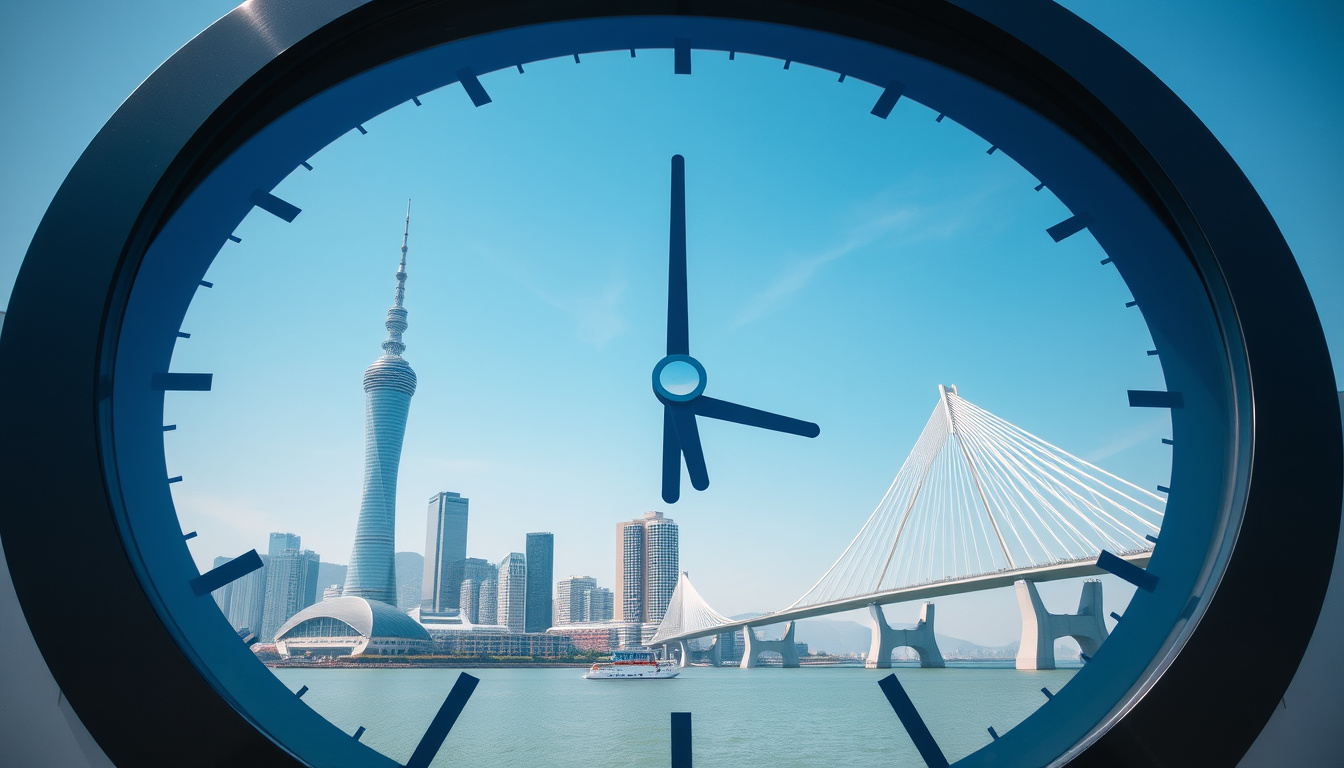
If you’ve ever tried scheduling a call between Seoul and New York, you know the math can get messy fast. South Korea runs on a single, unbroken clock from coast to coast—no daylight saving interruptions, no regional quirks to memorize. That consistency is exactly what makes it worth understanding before you book that flight or set up that video conference.
Time Zone: Korea Standard Time (KST) · UTC Offset: +9 hours · Daylight Saving: Not observed · Major Cities: Seoul, Busan
Quick snapshot
- KST runs UTC+9 year-round (time.is live clock)
- Both Seoul and Busan share Asia/Seoul IANA identifier (time.is official zone)
- South Korea abolished DST after October 9, 1988 (Wikipedia time policy)
- Pre-1988 historical DST details beyond the 1988 test remain sparse in English sources
- North Korea time comparison falls outside this article’s scope
- May 8, 1988: DST trial begins for Summer Olympics (Wikipedia historical record)
- October 9, 1988: DST abolished; UTC+9 made permanent (Wikipedia historical record)
- 2026: No DST adjustments confirmed (Wikipedia historical record)
- South Korea’s time zone remains stable—no reform discussions on record
- Travelers and remote workers can plan around KST with full confidence
The table below consolidates verified time zone data for South Korea from authoritative sources.
| Fact | Value | Source |
|---|---|---|
| Time Zone | KST (UTC+9) | Wikipedia |
| DST Observed | No | time.is |
| Capital City | Seoul | time.is |
| Major City Example | Busan | time.is |
| Seoul–New York difference | −13 hours | time.is |
| KST–UTC difference | +9 hours | time.is |
| DST end date | October 9, 1988 | Wikipedia |
| IANA identifier | Asia/Seoul | time.is |
What time is it in South Korea Seoul?
Seoul operates strictly on Korea Standard Time, fixed at UTC+9 with no seasonal adjustments. According to time.is, the city sits at coordinates 37.57° N, 126.98° E, placing its local clock roughly 30 minutes ahead of apparent solar time.
Current local time
Seoul’s clock shows KST, which runs 13 hours ahead of Eastern Daylight Time and 16 hours ahead of Pacific time when Los Angeles is on daylight saving. Live conversion tools from SavvyTime and WorldTimeBuddy let you compare Seoul against any US time zone instantly.
Sunrise and sunset times
Because Seoul’s UTC+9 offset exceeds its solar position, sunrise can appear surprisingly late by Western expectations. Timeanddate.com provides current sunrise and sunset data for Seoul alongside day-length figures that vary meaningfully across seasons.
Weather integration
Travelers often bundle time and weather planning. Checking local time alongside Seoul’s current conditions via weather services helps avoid the common mistake of misreading arrival times when jet lag compounds confusion.
Business callers between Seoul and New York should target 8pm–10pm Seoul time, which lands at 6am–8am EST—workable hours for morning meetings on the US side. This window reflects the consistent 13-hour gap that travelers can rely on year-round.
The implication: unlike US time zones that shift with DST, Seoul’s clock never requires mental adjustment for seasonal changes.
What time is it in South Korea Busan?
Busan, South Korea’s second-largest city with a population of roughly 3,678,555, follows the same KST schedule as Seoul without exception. The port city shares the Asia/Seoul IANA identifier, meaning any software or hardware set for “Seoul time” works identically for Busan.
Busan local time
Busan’s local time runs ahead of apparent solar time by 22 minutes, slightly less than Seoul’s offset, reflecting its eastern position within the same UTC+9 zone. At 1:12 pm in Los Angeles, Busan registers 5:12 am the following day.
Comparison to Seoul
There is no time difference between Seoul and Busan. WorldTimeBuddy confirms that both cities maintain identical time zone settings, a policy confirmed by Wikipedia’s coverage of South Korea’s uniform time approach.
The pattern: South Korea’s entire territory operates on a single clock, making intercity scheduling as simple as it gets.
Is Korea 12 hours ahead or behind?
The answer depends entirely on which US time zone you’re measuring against—Korea is never exactly 12 hours offset from standard US zones.
Vs US time zones
KST runs 13 hours ahead of Eastern Daylight Time, 14 hours ahead of Central Daylight Time, and 16 hours ahead of Pacific Daylight Time. During standard time, the gap widens by one hour across all US zones because South Korea never shifts for daylight saving.
Vs India
India operates at UTC+5:30, making South Korea 3 hours and 30 minutes ahead. Business callers should note this non-standard offset when scheduling across the India–Korea corridor. India does not observe daylight saving, so this difference holds year-round.
KST does not automatically adjust for US DST changes in conversion tools. When scheduling recurring meetings, verify your converter accounts for the seasonal shift, or the meeting will drift by one hour twice yearly.
The catch: recurring meetings require manual DST adjustment reminders unless your tool explicitly handles it.
What is South Korea time zone?
South Korea’s time zone is officially designated Korea Standard Time, abbreviated KST and fixed at UTC+9. The IANA database maps this to the identifier Asia/Seoul for all computing applications.
KST details
KST has operated at UTC+9 since the permanent abolition of daylight saving time on October 8, 1988. Wikipedia records that the zone originally centralized in 1954 and has remained unchanged for travelers, businesses, and systems ever since. The abbreviation KST applies year-round without seasonal switching.
No DST
South Korea tested DST briefly from May 8 to October 9, 1988, coinciding with the Summer Olympics hosted in Seoul. The trial ended, and the country has not observed daylight saving since. According to 24timezones, no adjustments are planned for 2026 or any foreseeable future.
The consequence: businesses and travelers can hard-code KST into scheduling systems without fear of annual shifts.
Korea time now from India?
When converting Korea time from India, the math involves both a standard 9-hour offset and India’s own 5-hour-30-minute offset from UTC. The result: Korea runs 3 hours and 30 minutes ahead of India regardless of season, since neither country adjusts for daylight saving.
Time difference calculator
SavvyTime’s converter handles the half-hour India offset cleanly, showing that 9pm IST equals 12:30am KST the following calendar day. For quick mental math, add 3.5 hours to any Indian time to get the Korean equivalent.
Converter tools
WorldTimeBuddy recommends using mouse-over features to visualize Seoul time against IST instantly, avoiding calculation errors for business calls between the two markets.
What this means: the India-Korea corridor stays stable, but the half-hour offset demands precise arithmetic.
Five key comparisons, one pattern: every major time zone runs behind KST by a predictable offset, and the lack of DST means those offsets never shift seasonally.
The comparison table below shows how KST stacks up against major business hubs.
| Location | Offset from KST | Best call window (KST side) |
|---|---|---|
| New York (EDT) | −13 hours | 8pm–10pm |
| Chicago (CDT) | −14 hours | 7pm–9pm |
| Los Angeles (PDT) | −16 hours | 5pm–7pm |
| London (BST) | −8 hours | 11am–1am next day |
| Mumbai (IST) | −3h 30m | 9am–11pm |
| Tokyo (JST) | Same | Any |
| Sydney (AEST) | −1 hour | Any |
The takeaway: KST’s fixed offset against other zones makes long-term planning straightforward.
South Korea has one time zone, Korea Standard Time (UTC+9), which is abbreviated KST. — Wikipedia (encyclopedia entry on South Korean time policy)
Seoul has not had daylight saving time since 1988. — time.is (live time authority)
For businesses coordinating across Seoul, Busan, and American hubs, the practical takeaway is straightforward: pick your UTC offset, apply the correction from the comparison table above, and lock in your window. The absence of Korean daylight saving eliminates one variable that routinely trips up trans-Pacific scheduling.
Related reading: Days Between Dates – Excel Formulas and Calculators Guide · NSW Public Holiday – 2024 & 2025 Dates Pay Rates
time.is, worldtimebuddy.com, savvytime.com, time.now, savvytime.com, worldtimeserver.com, worldtimeserver.com, zeitverschiebung.net, worldometers.info, time.now
Travelers comparing schedules will find the Swedish KST time guide useful for grasping KST differences from Seoul to Busan against European clocks.
Frequently asked questions
What is the current time in Korea AM or PM?
South Korea uses standard 12-hour time notation alongside 24-hour format in official contexts. Since KST is UTC+9, the AM/PM designation depends entirely on what you’re converting from—Korea itself uses the same system as the United States for everyday purposes.
Does South Korea have multiple time zones?
No. South Korea operates a single, unified time zone from the southern tip of Jeju to the northern border areas around Paju. All cities—including Seoul, Busan, Incheon, and Daegu—share the same KST schedule with no regional variations.
How many hours is Korea ahead of UTC?
Korea Standard Time is fixed at UTC+9, meaning it runs 9 hours ahead of Coordinated Universal Time. This offset has remained constant since the abolition of daylight saving time in October 1988.
What time does the sun rise in Seoul?
Sunrise times in Seoul vary by season, typically ranging from around 5:30am in summer to nearly 7:30am in winter. Timeanddate.com provides current sunrise and sunset data for Seoul with day-length calculations updated daily.
Is there a time converter for Korea?
Yes. Multiple services offer free conversion tools including time.is, SavvyTime, WorldTimeBuddy, and WorldTimeServer. These platforms handle the Korea–US offset adjustments and account for US daylight saving changes automatically.
What is the time difference between Seoul and Busan?
There is none. Seoul and Busan share the same KST (UTC+9) designation and the same IANA identifier (Asia/Seoul). No adjustment is needed regardless of which city you’re converting between.
Does Korea follow daylight saving time?
No. South Korea tested daylight saving briefly in 1988 for the Summer Olympics and abolished it permanently after October 9, 1988. There are no active proposals to reintroduce the practice, and none are planned for 2026.

Andrew Ellis leads fact-checking, source verification and corrections at Australia Focus.