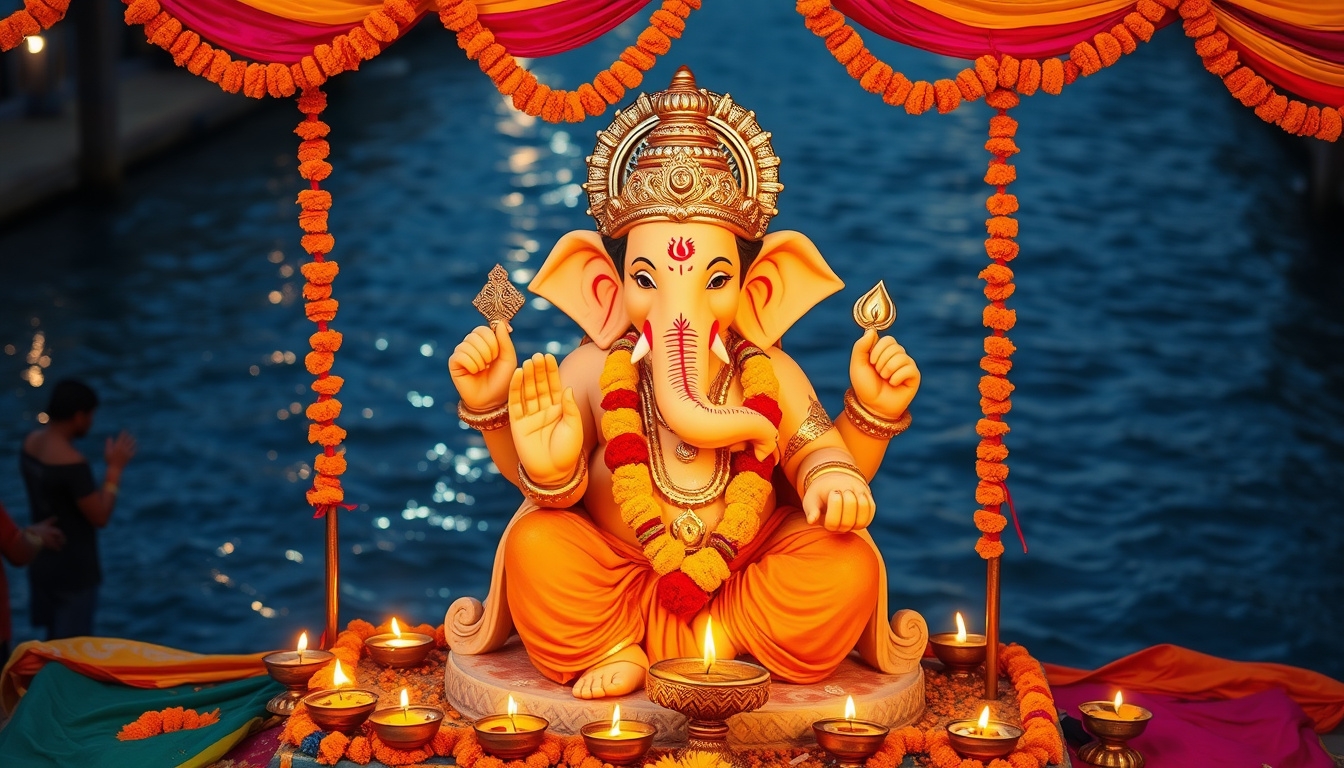
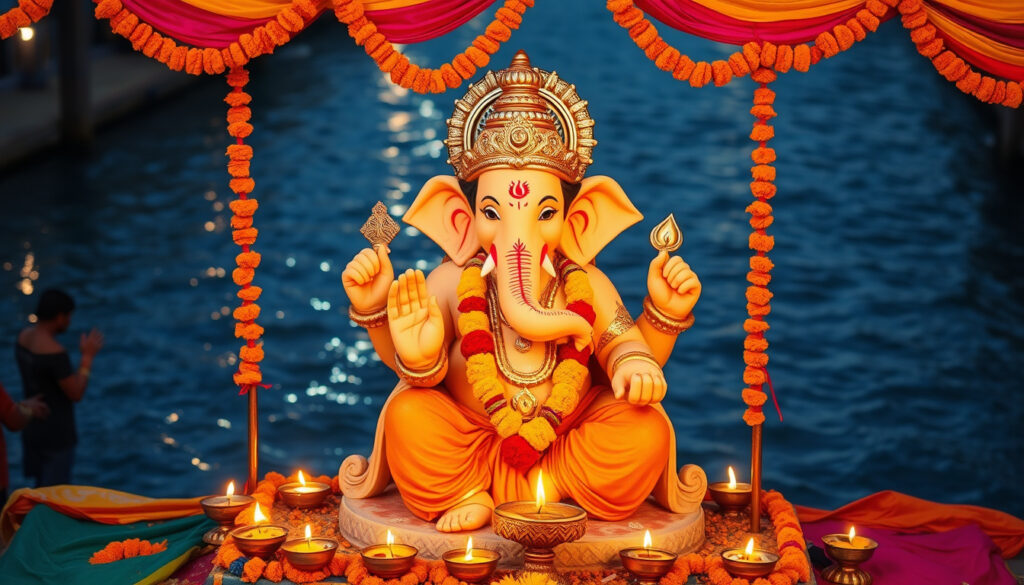
Ganesh Chaturthi 2025 falls on Wednesday, August 27 — but some calendars show August 26, and the confusion stems from how lunar tithis cross midnight. Understanding the difference matters if you want to catch the most auspicious worship window. Here’s everything you need to plan your 2025 celebrations with confidence.
Date: August 27, 2025 ·
Visarjan: September 6, 2025 ·
Duration: 10 days
Quick snapshot
- Ganesh Chaturthi 2025 falls on Wednesday, August 27 (Moneycontrol)
- The Chaturthi Tithi begins at 1:54 PM on August 26 and ends at 3:44 PM on August 27 (India Shopping)
- Visarjan takes place on Saturday, September 6, 2025 (Calendarr)
- Regional calendars may list August 26 as Chaturthi depending on how tithi overlap is calculated
- Local traditions in some states follow alternate muhurat timings beyond the standard Madhyahna window
- August 27: Madhyahna Ganesha Puja Muhurat (11:05 AM–1:40 PM) — the peak worship window (Calendarr)
- September 6: Anant Chaturdashi marks the final day (ISKCON Kurukshetra)
- September 16, 2026: Next year’s Ganesh Chaturthi (India Shopping)
- Public immersion processions will flow through major cities on September 6 (India Shopping)
Across 10 major Indian cities, the Madhyahna Ganesha Puja Muhurat — the most auspicious window for worship — consistently falls on August 27, with city-specific timing variations of just a few minutes.
City-wise puja timings for August 27, 2025, sourced from multiple regional calendars, are summarized in the table below.
| City | Madhyahna Puja Muhurat (Aug 27) | Source |
|---|---|---|
| New Delhi | 11:05 AM – 1:40 PM | India Today |
| Mumbai | 11:24 AM – 1:55 PM | India Today |
| Chennai | 10:56 AM – 1:25 PM | India Today |
| Bengaluru | 11:07 AM – 1:36 PM | India Today |
| Kolkata | 10:22 AM – 12:54 PM | India Today |
| Hyderabad | 11:02 AM – 1:33 PM | India Today |
| Pune | 11:21 AM – 1:51 PM | India Today |
| Jaipur | 11:11 AM – 1:45 PM | India Today |
The 35-minute spread across cities reflects India’s longitudinal span. Kolkata worships earliest because it lies farthest east; the rest fall within a narrower band. If you’re traveling for celebrations, your local temple’s muhurat will be within this range.
What is the real date of Ganesh Chaturthi in 2025?
Ganesh Chaturthi 2025 falls on Wednesday, August 27 — not August 26. According to the Hindu Panchang, the Chaturthi Tithi (fourth lunar day) technically begins at 1:54 PM on August 26, but it overlaps so significantly with August 27 that most regions observe the festival on the latter day. The Chaturthi Tithi ends at 3:44 PM on August 27, giving devotees a full window for celebration.
Some regional calendars list August 26 because they calculate based on when the tithi starts, not when most of its conducive hours fall. For worship purposes, the day with the majority of the tithi matters most — and that’s August 27.
August 26 vs August 27 debate
- Solar day calendars (like many modern print calendars): favor August 27, when the daytime hours of Chaturthi dominate
- Lunar calculation tables (used in some temple publications): may list August 26 if they emphasize tithi start time
Sources confirming dates
The disagreement isn’t about tradition or scripture; it’s about how calendrical systems interpret lunar days that cross midnight. Hinduism measures days from sunrise to sunrise, but tithis (lunar days) don’t follow that schedule. When a tithi begins in the afternoon and extends into the next morning, different calculation methods weight the overlap differently.
For the Madhyahna Ganesha Puja specifically, the most auspicious window of the day, all major sources — including Calendarr and Moneycontrol — consistently point to August 27.
The confirmation comes from multiple independent sources. India Today lists city-wise muhurats for August 27, 2025. The Drik Panchang database shows historical dates aligning with this pattern: September 7, 2024; September 19, 2023; August 31, 2022.
Devotees should also note moon-sighting avoidance periods: August 26 from 1:54 PM to 8:29 PM, and August 27 from 9:28 AM to 8:57 PM. These windows are considered inauspicious for viewing the moon during the festival, according to Hindustan Times.
Is Ganpati 10 days or 11 days?
The traditional Ganesh Chaturthi celebration spans 10 days, ending on Anant Chaturdashi (the 14th lunar day of the fortnight). However, some traditions observe an 11-day variant, particularly in specific communities or regions. Understanding this distinction helps you plan your immersion date correctly.
Traditional 10-day celebration
Lord Ganesha is installed on Ganesh Chaturthi (day 1) and worshipped daily through the festival. The culmination comes on Anant Chaturdashi (day 10 or 11, depending on how you count), when devotees perform Ganesh Visarjan — the immersion of the idol in water. India Today notes that the immersion signifies the cycle of birth and dissolution, reminding devotees of impermanence and spiritual renewal.
In Maharashtra — where the festival originated as a public celebration in the 19th century — the 10-day format dominates. Families typically bring home a medium-sized idol on day 1 and perform daily puja until the final procession.
Variations in observance
Some households observe 1-day, 3-day, 5-day, 7-day, or 11-day versions depending on personal preference, family tradition, or convenience. The 11-day variant is considered especially auspicious but requires a longer commitment. The choice doesn’t affect spiritual validity — it reflects personal or family circumstances.
The Chaturdashi Tithi for Ganesh Visarjan 2025 begins at 3:12 AM on September 6 and ends at 1:41 AM on September 7, according to Times of India. The morning auspicious Choghadiya Muhurat for Visarjan is from 7:36 AM to 9:10 AM; the afternoon window runs from 12:19 PM to 5:02 PM.
What this means: whether you observe 10 or 11 days, the Visarjan window on September 6 remains constant. The difference is in when you start — and that choice is yours to make based on your schedule and conviction.
Ganesh Chaturthi 2025 Visarjan date
Ganesh Visarjan in 2025 falls on Saturday, September 6. This date marks Anant Chaturdashi, the final day of the Ganesh Chaturthi cycle, when devotees carry their idols in grand processions to rivers, lakes, or the sea for immersion.
Calculating Visarjan
The Visarjan date is determined by the Chaturdashi Tithi — the 14th lunar day of the bright fortnight (Shukla Paksha) in the Hindu month of Bhadrapada. For 2025, the Chaturdashi Tithi begins at 3:12 AM on September 6 and concludes at 1:41 AM on September 7.
Most auspicious Visarjan timings on September 6:
- Morning Choghadiya: 7:36 AM – 9:10 AM
- Afternoon Choghadiya: 12:19 PM – 5:02 PM
These windows, reported by Times of India, represent periods when astrological conditions favor the immersion ritual. Skipping these windows is permissible if circumstances require, but devotees who can align their Visarjan with them often experience it as more spiritually satisfying.
Start and end dates
The festival timeline runs as follows:
- August 27, 2025: Ganesh Chaturthi — installation and first-day puja
- August 27 – September 5: Daily worship, typically involving morning and evening aartis, fresh offerings, and chanting
- September 6, 2025: Visarjan — the farewell procession and immersion
Devotees who count the installation day as day 1 reach Visarjan on day 10. Those who begin counting from the previous day may calculate it as day 11 — hence the “10 vs 11 days” debate.
Why this matters: If you’re organizing community celebrations, coordinating with a pandit (priest), or planning travel, knowing whether you follow the 10-day or 11-day tradition affects your scheduling. Both are valid; consistency within your household is what counts.
The Chaturthi Tithi falls on the fourth day of the Shukla Paksha (bright half of the moon) in Bhadrapada. The festival celebrates Lord Ganesha’s birth, and the Madhyahna (midday) period is considered most auspicious because it’s believed Ganesha was born during this time.
Which god removes obstacles?
Lord Ganesha is the Hindu deity known as the remover of obstacles (Vighnaharta in Sanskrit). He sits at the entrance of temples, homes, and shrines precisely because his role is to clear the path for success in any endeavor.
Ganesha’s role
Ganesha occupies a unique position in the Hindu pantheon. Worshipped before any new venture — a business, a wedding, a journey, a ceremony — he ensures that roadblocks dissolve and opportunities open. His name itself combines “ga” (which can mean “whole” or “sacred”) and “napati” (lord of).
As the son of Shiva and Parvati, Ganesha’s elephant head represents wisdom, discrimination, and the ability to perceive beyond ordinary sight. His large ears hear all prayers; his trunk searches for solutions others miss.
The India Today profile of the festival describes Ganesha as “revered in Hindu mythology, known as the remover of obstacles and god of wisdom and prosperity.” His two consorts — Riddhi (prosperity) and Siddhi (success) — attend him, making him a complete source for material and spiritual achievement.
Hindu god of intelligence
Ganesha also holds the title of god of intelligence and learning. Students in India traditionally offer prayers to him before exams. His association with the root chakra in some traditions connects him to primal energy and new beginnings.
In art, Ganesha’s broken tusk — which he used to write the Mahabharata as Vyasa dictated — symbolizes sacrifice for knowledge. Even his physical form tells stories: the mouse he rides represents conquered ego, and his modak-shaped belly holds contentment.
The ritual of installing Ganesha at the start of Ganesh Chaturthi isn’t just celebration — it’s re-establishing his presence in your space for the next 10 days. When you begin any project during this period, you’re believed to have his direct support.
What kind of food is eaten during Ganesh Chaturthi?
Food during Ganesh Chaturthi centers on offerings to Lord Ganesha followed by distribution to family, friends, and the community. The cuisine reflects devotion, abundance, and regional flavor — with some dishes considered essential because Ganesha himself is believed to favor them.
Traditional bhog
The term “bhog” refers to food offered to the deity before devotees consume it. Traditional Ganesh Chaturthi bhog includes:
- Modak — Sweet dumplings (20-25 pieces per offering) made from rice or wheat flour filled with coconut and jaggery. Considered Ganesha’s favorite.
- Ladoo — Besan (gram flour) or motichoor ladoos, prepared with ghee and sugar. Often offered in sets of 21.
- Durva grass — 21 blades arranged in a specific pattern; Ganesha is offered this as it satisfies him spiritually.
- Ghee lamps — Mustard oil or ghee burned in clay lamps, illuminating the idol throughout the day.
According to India TV News, “Traditional offerings during Ganesh Puja include modaks, laddoos, durva grass, and ghee lamps.” These form the core of what’s placed before the idol, with other dishes varying by region and family tradition.
After the aarti (worship song), the prasad (blessed food) is distributed. In Maharashtra, you might see puran poli and modak chaat served at community gatherings. In Karnataka, beppe kumba (rice-based sweet) appears alongside the modaks.
Ganesha’s favourite fruit
Coconut holds special significance — the hard shell represents protection, and breaking it before the deity symbolizes shattering one’s obstacles. Mangoes, bananas, and sweet potatoes also appear frequently. Fruits are arranged in specific patterns, often with a coconut at the center.
The festival’s communal aspect means that food transforms into an act of community-building. Families prepare in large quantities because sharing prasad multiplies the blessing. Neighborhood pandals (temporary stages) serve thousands of meals daily, turning individual devotion into collective celebration.
Ganesha loves modak so much that he’s often depicted holding one. Yet the most elaborate preparations happen for community feasts, not solitary worship. The festival turns individual devotion into shared celebration — your offerings become everyone’s prasad.
The pattern shows that even beloved personal rituals become amplified through community sharing during Ganesh Chaturthi.
Ganesh Chaturthi 2025 Timeline
Ganesh Chaturthi — idol installation and first puja
Madhyahna Ganesha Puja Muhurat — most auspicious worship window
Daily puja rituals — morning and evening aarti, fresh offerings
Visarjan — grand processions with music, dance, and water immersion
Confirmed facts vs rumors
Confirmed
- Ganesha is the remover of obstacles in Hindu tradition (India Today)
- August 27, 2025, is the primary celebration date across 10 major cities (Moneycontrol)
- Visarjan occurs on September 6, 2025, as Anant Chaturdashi (Calendarr)
- The festival is particularly important in Maharashtra and Karnataka (India Shopping)
Unconfirmed / region-dependent
- Whether certain communities observe 10 or 11 days — depends on family tradition
- Specific community pandal themes — these aren’t announced until closer to the festival
- Some calendars listing August 26 — these may reflect calculation methodology, not the main celebration day
What experts say
Ganesh Chaturthi celebrates the birth of Lord Ganesha, the elephant-headed god revered in Hindu mythology, known as the remover of obstacles and god of wisdom and prosperity.
— India Today (news analysis, August 2025)
The Chaturthi Tithi (fourth lunar day) begins at 1:54 PM on August 26, 2025, and ends at 3:44 PM on August 27, 2025. The Madhyahna Ganesha Puja Muhurat (most auspicious time for worship) on August 27, 2025, is from 11:05 AM to 1:40 PM.
— Calendarr (panchang calendar data)
Ganesh Chaturthi 2025 holds particular significance because it falls on a Wednesday — a day traditionally associated with Ganesha worship. The festival transforms India’s cities, especially Maharashtra and Karnataka, into vibrant showcases of devotion and community spirit. Whether you install a small home idol or join a neighborhood pandal’s massive installation, the core ritual remains unchanged: honoring the remover of obstacles and inviting his presence into your space.
For devotees planning travel or family gatherings around this period, the August 27 – September 6 window is now locked in. The Visarjan on September 6 will draw processions through major urban centers; if you’re attending, plan for road closures and crowd density in the afternoon and evening hours.
Related reading: Eid ul-Fitr 2025 dates and moon sighting · NSW Public Holidays 2024 & 2025 dates
Frequently asked questions
What is Ganesh Chaturthi?
Ganesh Chaturthi is a 10-day Hindu festival celebrating the birth of Lord Ganesha, the elephant-headed deity known as the remover of obstacles and god of wisdom and prosperity. It falls on the fourth day (Chaturthi) of the bright fortnight (Shukla Paksha) in the Hindu month of Bhadrapada.
Why is Ganesha worshipped first?
Ganesha is worshipped first in any ceremony because he removes obstacles (Vighnaharta). Invoking him before any new venture — whether a wedding, business, or exam — is believed to clear the path for success. His position at the doorway of temples and homes reinforces this guardian role.
What is modak in Ganesh Chaturthi?
Modak is a sweet dumpling made from rice or wheat flour, filled with coconut and jaggery. It’s considered Ganesha’s favorite food. Traditionally, 21 modaks are offered during puja. After the aarti, they become prasad (blessed food) distributed to family and guests.
How is Ganesh idol made?
Ganesh idols are traditionally made from clay (shadu clay) collected from riverbeds, mixed with water and natural binding agents. Artisan sculptors shape the clay around a wire and bamboo frame, adding details like the trunk, seated posture, and accessories. Modern idols may use Plaster of Paris (POP), though eco-friendly clay versions are increasingly preferred.
What happens on Anant Chaturdashi?
Anant Chaturdashi is the 14th lunar day of the bright fortnight, marking the final day of Ganesh Chaturthi. On this day, devotees perform Ganesh Visarjan — carrying their idols in procession to a water body (river, lake, or sea) for immersion. The ritual symbolizes the cycle of birth and dissolution, reminding devotees of impermanence and spiritual renewal.
Where is Ganesh Chaturthi biggest?
Mumbai and Pune in Maharashtra host the largest Ganesh Chaturthi celebrations, with elaborate pandals, massive community idols (some over 20 feet tall), and days-long processions. The Khairatabad Ganesh in Hyderabad also draws enormous crowds with its record-setting idol heights. Bengaluru and Chennai have significant regional celebrations with unique local traditions.
Is Ganesh Chaturthi a holiday in India?
Ganesh Chaturthi is a gazetted public holiday in Maharashtra, Gujarat, Karnataka, and Goa. Other states may have optional holidays or restricted bank closures. If you’re traveling to these states for the festival, expect government offices, banks, and many businesses to remain closed on August 27 and potentially September 6.

Andrew Ellis leads fact-checking, source verification and corrections at Australia Focus.