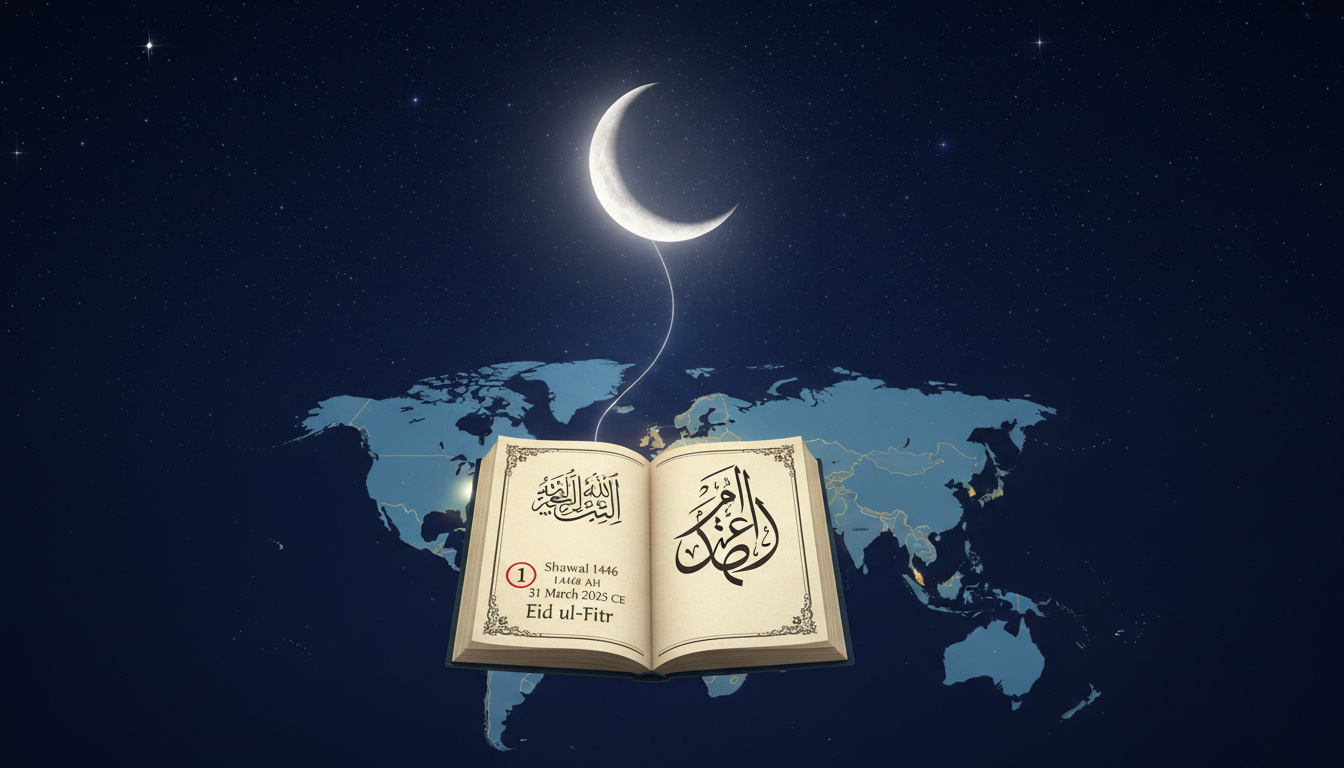
Eid ul-Fitr 2025 marked the end of Ramadan 1446 AH, with the festival falling on either March 30 or March 31 depending on the sighting of the Shawwal crescent moon. The divergence in dates across major Islamic nations highlighted the ongoing interplay between traditional moon sighting practices and modern astronomical calculations.
The Islamic calendar relies on visual confirmation of the new moon to signal the transition from Ramadan to Shawwal. For 2025, astronomical data indicated the new moon conjunction occurred on March 29 at approximately 10:57 UT, yet visibility conditions varied significantly by geography, leading to differing announcements by national religious authorities.
Saudi Arabia and the United Arab Emirates declared Eid for Sunday, March 30, while Iran, India, and Oman positioned their celebrations for Monday, March 31. These discrepancies underscore the complexity of lunar calendar observation within the global Muslim community.
When is Eid ul-Fitr 2025?
- Primary Date: March 30-31, 2025
- Ramadan Length: 29-30 days beginning March 1
- Determining Factor: Shawwal crescent moon visibility
- Global Variance: 1-2 day differences by region
- Saudi Arabia declared March 30 based on reports from 10 monitoring observatories, including a brief sighting window at Tumair
- The UAE confirmed March 30 through their official Moon-Sighting Committee, with verification from multiple locations including Al Khatim and Jabal Hafeet
- Astronomers calculated that crescent visibility on March 29 was theoretically impossible in the Middle East due to the moon setting minutes after sunset
- Iran announced Eid for March 31 following their established sighting protocols and local observations
- India anticipated March 31 based on traditional sighting methods and regional moon visibility forecasts
- The United States faced variable timing dependent on local horizon conditions, with astronomical data suggesting potential visibility in North America
- Morocco and Oman both confirmed March 31 as the Eid date, aligning with calculations predicting a 30-day Ramadan
| Fact | Details |
|---|---|
| Islamic Year | 1446 AH |
| Ramadan 2025 Start | March 1, 2025 |
| New Moon Conjunction | March 29, 2025 at 10:57 UT |
| Saudi Arabia Eid Date | March 30 (Umm al-Qura calendar basis) |
| UAE Eid Date | March 30 (Moon-Sighting Committee) |
| Iran Eid Date | March 31 |
| India Eid Date | March 31 (predicted) |
| Morocco Eid Date | March 31 (expected) |
| Oman Eid Date | March 31 |
| Eid Prayer Timing | Post-sunrise, typically 7:00-9:00 AM local time |
How is the Eid ul-Fitr 2025 Date Determined?
The date of Eid ul-Fitr is established by the sighting of the crescent moon that marks the beginning of Shawwal, the tenth month of the Islamic Hijri calendar. Religious authorities typically search for the new moon after sunset on the 29th day of Ramadan; if observed, Eid commences the following morning, otherwise Ramadan extends to 30 days.
The Crescent Sighting Process
Traditional methodology requires naked-eye observation of the crescent, though optical aids such as binoculars or telescopes are frequently employed. According to Gulf News, the UAE Fatwa Council urged public participation in sighting efforts on March 29, while Saudi Arabia’s Supreme Court similarly solicited observations from across the Kingdom.
Astronomical Data and Calculations
Astronomical calculations for 2025 placed the new moon conjunction at approximately 10:57 UT on March 29. Moonsighting.com noted that in North America, the elongation exceeded 8 degrees with the moon positioned more than 5 degrees above the sun, creating potential visibility conditions. However, the same data indicated that in the Middle East, the moon would set only 7 to 8 minutes after sunset, rendering optical observation extremely challenging if not impossible.
At the Tumair observatory near Riyadh, sunset occurred at 6:11 PM on March 29, with the moon setting merely 8 minutes later. This narrow window created significant difficulty for visual confirmation, yet Saudi authorities reported successful sightings from this location.
The Role of Religious Authorities
National moon-sighting committees hold ultimate authority in declaring Eid dates. Saudi Arabia utilizes the Umm al-Qura calendar for preliminary planning but officially relies on confirmed sightings. NDTV reported that variations arise between countries prioritizing local sighting reports versus those accepting astronomical calculations or remote sightings from allied nations.
Eid ul-Fitr 2025 Dates by Country
National declarations for Eid ul-Fitr 2025 revealed a split between March 30 and March 31 observances, reflecting different methodological approaches to crescent verification. The following breakdown examines the specific determinations by regional authorities.
Saudi Arabia and the United Arab Emirates
Saudi Arabia declared Sunday, March 30 as Eid al-Fitr despite astronomical predictions suggesting sighting impossibility. Middle East Eye reported that the Kingdom’s 10 observatories, including facilities at Tumair, allegedly confirmed the crescent during a brief 7-8 minute visibility window. The UAE’s Moon-Sighting Committee similarly announced March 30, citing confirmations from Al Khatim, Jabal Hafeet, Dubai, Sharjah, and Ras Al Khaimah.
Astronomers have questioned the Saudi and UAE sightings, noting that the moon’s position on March 29 made it invisible to the naked eye in the Middle East region. The discrepancy between calculated astronomical data and official sightings sparked debate regarding the verification methodologies employed by these committees.
Iran and South Asia
Iran announced Eid for Monday, March 31, following the sunset of Ramadan 28 according to their official calendar. Hindustan Times indicated that India likely would observe Eid on March 31, adhering to local sighting traditions that require confirmed naked-eye observation within the subcontinent.
North America and Europe
The United States followed global variations, with some communities aligning with Saudi announcements and others awaiting local sightings. Morocco World News reported that Morocco expected March 31, consistent with astronomical calculations favoring a 30-day Ramadan. European Muslims generally followed national Islamic council determinations, resulting in split observances between the two dates.
What is Eid ul-Fitr and Its Significance?
Eid al-Fitr, literally the “Festival of Breaking the Fast,” concludes the month-long Ramadan observance of fasting, prayer, and spiritual reflection. The celebration dates to the time of Prophet Muhammad and symbolizes gratitude, communal solidarity, and charitable obligation through Zakat al-Fitr.
Zakat al-Fitr requires Muslims to provide staple food items or monetary equivalent to the poor before performing the Eid prayer. This charity purifies the fasting person from minor infractions during Ramadan and ensures economically disadvantaged community members can participate in the celebrations. For more details on when Eid ul-Fitr 2025 will be celebrated, please visit $morningtimes.uk.
The festival also commemorates Laylatul Qadr (the Night of Power), believed to occur during the final ten nights of Ramadan, when the Quran’s revelation began. Historical records indicate that the Islamic lunar calendar shifts approximately 10-11 days earlier each Gregorian year, causing Eid to rotate through the seasons.
Celebrations typically include special congregational prayers held in mosques or open grounds at dawn, followed by sermons and community gatherings. Families don new clothing, prepare elaborate meals and sweets, visit relatives, and distribute Eidi—gifts or money—to children. Saudi Arabia observes a four-day national holiday, while the UAE grants three or more days for the occasion.
Timeline of Key Events for Eid ul-Fitr 2025
- : Ramadan 1446 AH commenced across most Muslim nations, beginning the fasting month.
- : The new moon conjunction occurred at 10:57 UT; moon sighting committees convened after sunset to search for the Shawwal crescent.
- : Saudi Arabia and the UAE declared Eid based on reported sightings, despite astronomical skepticism regarding visibility.
- : Iran, India, Oman, and Morocco observed Eid ul-Fitr following 30 days of Ramadan or local sighting confirmations.
- : The previous year’s Eid al-Fitr occurred, demonstrating the Islamic calendar’s annual 10-11 day backward shift through the Gregorian year.
Established Facts and Remaining Questions
Confirmed Information
- Ramadan 1446 AH began on March 1, 2025
- The astronomical new moon (conjunction) occurred March 29 at 10:57 UT
- Islamic lunar months consist of either 29 or 30 days
- Saudi Arabia utilizes the Umm al-Qura calendar for preliminary planning alongside official sightings
- The UAE operates multiple official observatories for crescent verification
Points of Uncertainty
- The actual visibility of the crescent moon on March 29 in the Middle East remains scientifically disputed
- Exact Eid dates for sighting-dependent countries remained tentative until the night of March 29
- Whether Saudi observatories detected the crescent optically or instrumentally during the 7-8 minute window
- The precise duration of Ramadan (29 or 30 days) in regions without advanced observational infrastructure
Cultural Context and Global Observance
Eid ul-Fitr represents one of the two major Islamic festivals, transcending geographic and cultural boundaries to unite approximately 1.9 billion Muslims worldwide. The celebration marks not merely the end of dietary restrictions but the completion of intensive spiritual renewal, nightly prayers, and Quranic recitation characteristic of Ramadan.
The month-long fast culminates in communal prayers that often overflow from mosques into parks and stadiums, emphasizing the ummah’s collective identity. Preparations begin during the final ten nights of Ramadan, with households cleaning, purchasing garments, and preparing traditional foods. The Hijri calendar’s lunar nature ensures that Eid occurs approximately 11 days earlier each solar year, rotating the festival through all seasons over a 33-year cycle.
Expert Perspectives and Official Statements
Astronomer Ibrahim Al-Jarwan predicted that Ramadan would complete 30 days, placing Eid al-Fitr on March 31 based on astronomical calculations rather than sighting reports.
— Middle East Eye, citing UAE astronomical calculations
The Saudi Supreme Court and UAE Fatwa Council urged public participation in moon sighting efforts on March 29, calling for observations from across their respective territories to verify the Shawwal crescent.
— Gulf News
Despite astronomical data indicating the crescent moon would set only 8 minutes after sunset on March 29—rendering naked-eye observation impossible—Saudi authorities reported confirmed sightings from 10 monitoring stations.
— Hindustan Times
Summary of Eid ul-Fitr 2025 Determinations
Eid ul-Fitr 2025 manifested the ongoing complexity of lunar calendar observation within the Islamic world, with major nations dividing between March 30 and March 31 celebrations. While Saudi Arabia and the UAE proceeded with March 30 based on reported sightings, Iran, India, and Morocco maintained March 31 observances aligned with astronomical predictions. For preparation guidance regarding future observances, consult the complete Ramadan schedule.
Frequently Asked Questions
When did Ramadan 2025 start?
Ramadan 1446 AH began on March 1, 2025, following the sighting of the crescent moon in late February across most Muslim-majority nations.
What is the religious significance of Eid ul-Fitr?
The festival marks the end of Ramadan fasting and spiritual reflection, emphasizing gratitude to God, charitable giving through Zakat al-Fitr, family unity, and communal prayer. It dates to the era of Prophet Muhammad.
Related stories

Andrew Ellis leads fact-checking, source verification and corrections at Australia Focus.