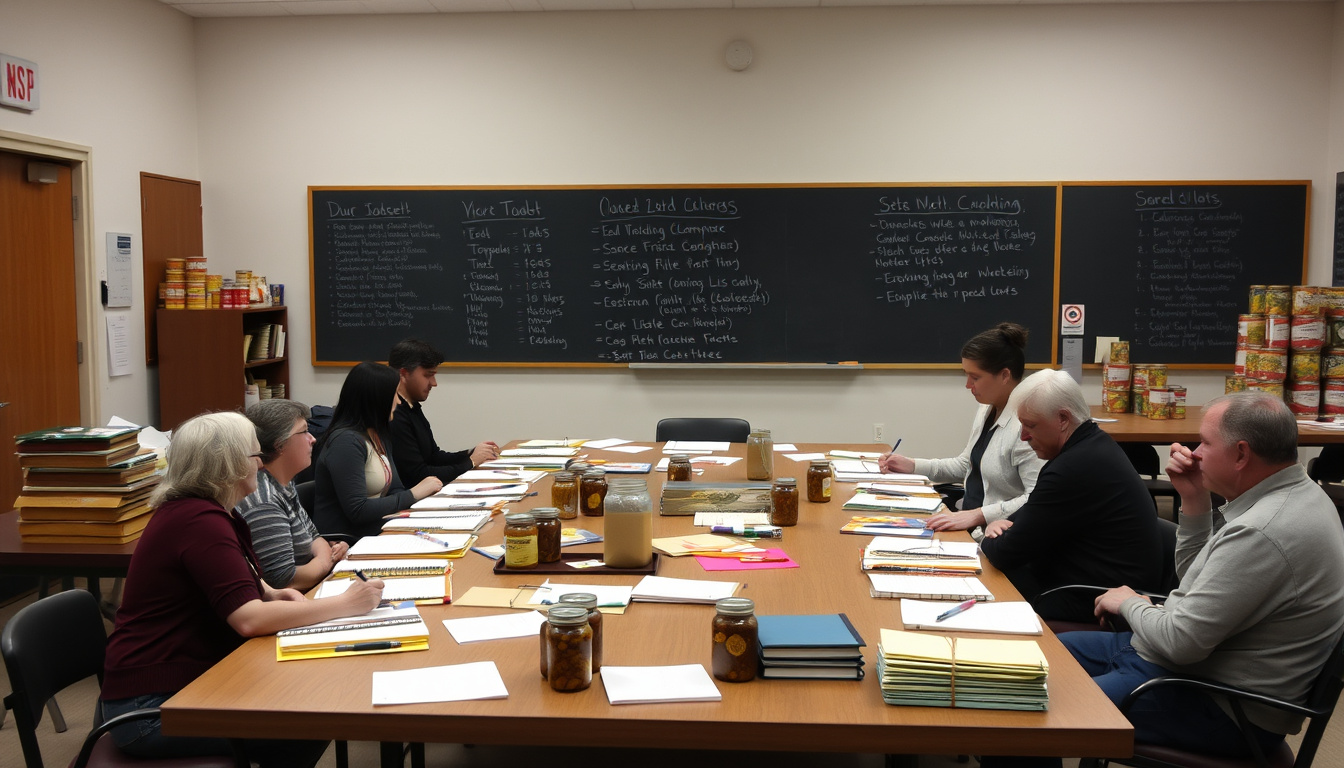
Mutual aid groups are often mistaken for charity, but they operate on a fundamentally different principle of reciprocal solidarity. Here’s what they actually are, how they differ from charity, and how you can start one.
Definition: Voluntary, reciprocal exchange of resources and services for common benefit · Key theorist: Peter Kropotkin (1902) · Core principle: Solidarity, not charity
Quick snapshot
- Mutual aid groups operate on voluntary, reciprocal exchange (Public Health Degrees – health education resource)
- They emphasize solidarity over charity (University of Chicago Press – academic research)
- Long-term sustainability of informal groups (University of Chicago Press – academic research)
- Exact number of active mutual aid groups worldwide (University of Chicago Press – academic research)
- First UK mutual aid groups formed in March 2020, just before COVID-19 lockdown (Association of Charitable Support and Services – UK research)
- Growing interest in mutual aid as an alternative to traditional charity models
| Core structure | Voluntary, reciprocal exchange of resources and services |
| Guiding slogan | “Solidarity not charity” |
| Common activities | Food distribution, financial assistance, disability allyship, neighborhood pods |
Below is a quick reference summary of mutual aid vs charity.
| Aspect | Mutual aid | Charity |
|---|---|---|
| Power dynamic | Horizontal, reciprocal | Vertical, donor-recipient |
| Reciprocity | Everyone gives and receives | One-way giving |
| Decision-making | Consensus, non-hierarchical | Top-down, organizational |
What is mutual aid and how does it work?
Defining mutual aid
- Mutual aid refers to the voluntary exchange of resources and services between community members (Public Health Degrees – health education resource)
- It can be formal or informal, short-term or long-term (University of Chicago Press – academic research)
At its heart, mutual aid is about people coming together to meet each other’s needs without waiting for formal institutions. Participants contribute money, material resources, time, or skills — and they expect to receive help in return when needed.
How mutual aid groups operate
- Groups decide collectively on how resources are distributed (MutualAid.coop – cooperative resource)
- They use decentralized, non-hierarchical structures (University of Chicago Press – academic research)
Decision-making happens through consensus, not top-down management. Many groups use simple tools like shared spreadsheets, messaging apps, and regular check-in calls to coordinate.
Key differences from charity
- Charity is one-way giving; mutual aid is reciprocal (Public Health Degrees – health education resource)
- Mutual aid rejects the power imbalance of donor-recipient relationships (University of Chicago Press – academic research)
Charity asks “What can I do for you?” Mutual aid asks “What can we do for each other?” That small shift in language changes the entire power dynamic — the recipient becomes a co-owner of the solution.
The implication: mutual aid reframes help as a shared responsibility, not a gift.
What is the mutual aid group theory?
Origins in anarchist thought
- Peter Kropotkin, a Russian anarchist and scientist, wrote the foundational text Mutual Aid: A Factor of Evolution in 1902 (Public Health Degrees – overview of history)
Kropotkin argued that cooperation, not competition, drives species to thrive. He observed that animals and humans alike form cooperative networks to survive harsh conditions.
Kropotkin’s contributions
- He documented mutual aid practices across pre-industrial societies and medieval guilds (University of Chicago Press – academic analysis)
Kropotkin’s work directly challenged social Darwinism. He showed that in tough times, cooperation outperforms every-man-for-himself behavior.
Modern interpretations
- Today’s mutual aid groups apply Kropotkin’s ideas to urban neighborhoods, disaster response, and chronic illness support (American Friends Service Committee – practical guide)
Academic research identifies three common values underlying modern mutual aid: reciprocity, shared humanity, and community-driven redistribution of resources.
Kropotkin’s theory gives mutual aid a political edge: it’s not just helpful — it’s a critique of systems that leave people isolated. That’s why some governments and foundations are cautious about endorsing it.
The catch: theory alone doesn’t guarantee practice, but it provides a moral compass for organizers.
Is mutual aid good?
Benefits of mutual aid
- Builds stronger community ties and reduces social isolation (Association of Charitable Support and Services – UK study)
- Can respond faster than formal agencies in emergencies (Association of Charitable Support and Services – UK study)
Potential challenges
- Sustainability is difficult without stable funding or paid staff (University of Chicago Press – academic research)
- Scaling up can dilute trust and accountability
Pros and cons overview
Upsides
- Flexibility to meet local needs quickly
- Trust built through direct relationships
- No bureaucratic overhead
Downsides
- Lack of formal structure can cause burnout
- Hard to sustain momentum after the immediate crisis
- Exclusion of people without internet access
The trade-off: Mutual aid is powerful for short-term, hyperlocal needs but struggles to deliver the reliable, long-term support that funded charities can provide.
How to create a mutual aid network?
Identifying needs and resources
- Talk to neighbors and local organizers to find out what people need and what they can offer (American Friends Service Committee – step-by-step guide)
Building trust and connections
- Start with a small core team that shares a commitment to non-hierarchical decision-making (MutualAid.coop – cooperative resource)
Setting up communication channels
- Use free tools like WhatsApp, Signal, or Google Groups to coordinate (American Friends Service Committee – practical guide)
Examples from AFSC guide
- Research existing mutual aid toolkits and check if others in your area are already organizing.
- Develop a “pod” of support and learn the history and elements of mutual aid.
- Use simple graphics to spread the word — a clear flyer with a phone number and a list of needs and offers can launch a network within days.
AFSC also recommends using simple graphics to spread the word — a clear flyer with a phone number and a list of needs and offers can launch a network within days.
For more on organizing principles, see our guide to building a code of conduct — a mutual aid group that scales needs shared rules everyone agrees on.
What is an example of mutual aid?
Historical mutual aid societies
- In the UK, friendly societies and building societies emerged in the 18th and 19th centuries as workers pooled resources for sickness and funeral costs (Public Health Degrees – historical context)
Modern grassroots networks
- During the COVID-19 pandemic, UK mutual aid groups provided grocery shopping, prescription collection, dog walking, and emotional support to shielded people (Association of Charitable Support and Services – UK study)
Case from Mutual Aid NYC
- Mutual Aid NYC coordinates over 100 groups across New York City, offering everything from cash assistance to childcare swaps (Public Health Degrees – modern example)
“Mutual aid is a horizontal mode of organisation that aims to break down hierarchies and practice collective decision-making for the common good.”
— MutualAid.coop (cooperative resource)
“Mutual aid builds solidarity by creating communities of care that redistribute wealth and share skills and material resources.”
— American Friends Service Committee (Quaker peace and justice organization)
These examples show that mutual aid isn’t a single model — it adapts to its community. Whether in a historic London guild or a modern Brooklyn WhatsApp group, the principle of reciprocal care remains the same.
Related reading: **Code of Conduct** · **Business Model Canvas**
Frequently asked questions
What is a mutual aid group?
A mutual aid group is a voluntary, reciprocal network where community members exchange resources and services based on need and ability, without hierarchical control.
How does mutual aid differ from charity?
Charity is one-way giving from a donor to a recipient, often reinforcing power imbalances. Mutual aid is reciprocal — everyone gives and receives, building solidarity instead of dependency.
Is mutual aid legal?
Yes. Mutual aid groups are generally legal as long as they comply with local laws on fundraising, food safety, and liability. Some US states recognize Mutual Aid Agreements in public health law.
Can mutual aid groups receive government funding?
Some groups do accept grants, but many prefer to remain independent to avoid bureaucratic requirements that conflict with their non-hierarchical values.
How do mutual aid groups handle money?
Most use informal pooled funds or a shared bank account managed by a trusted member. Transparency is key — many groups post income and expenses publicly.
What are the risks of mutual aid groups?
Burnout among volunteers, lack of accountability for funds, and exclusion of people without digital access are common risks. Clear communication and rotating roles can mitigate them.

Ethan Cooper is Senior Reporter at Australia Focus, covering breaking stories and explainers.