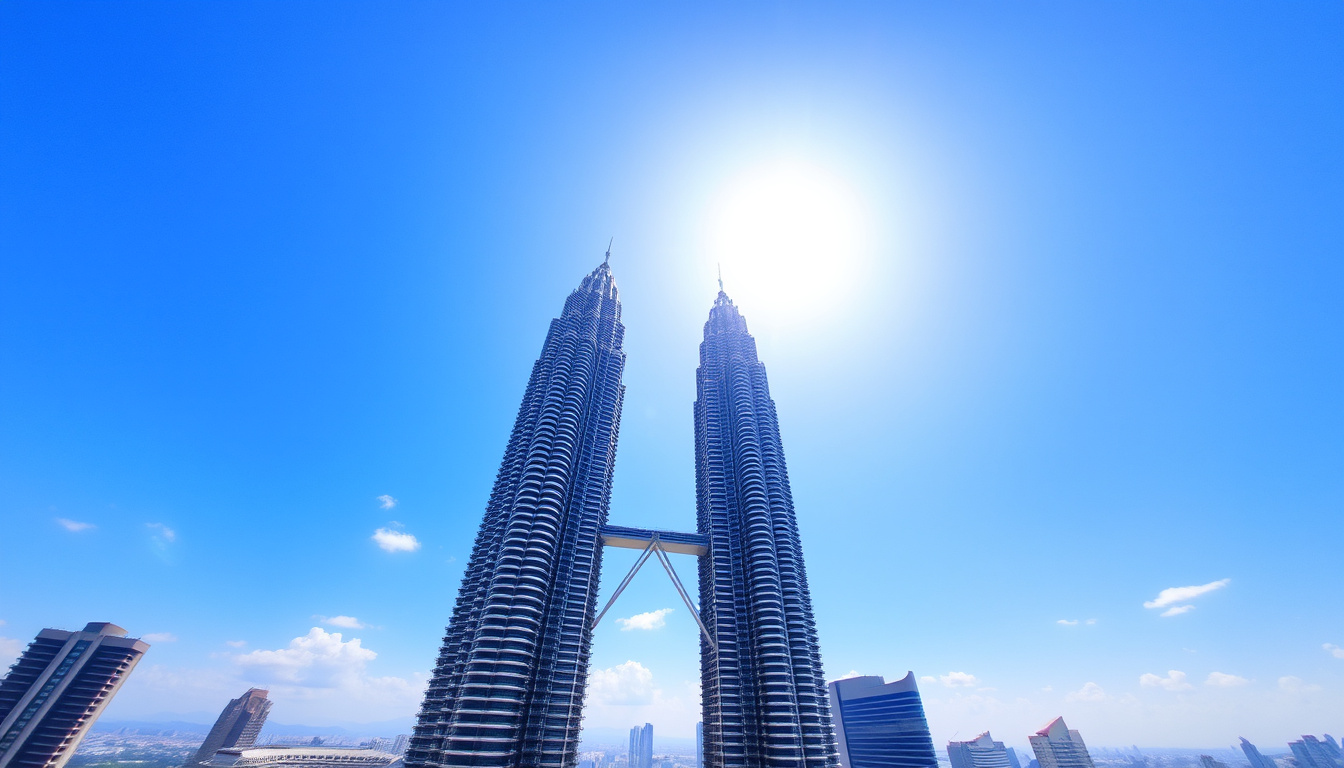
There are few skylines as instantly recognizable as Kuala Lumpur’s, and the twin spires that define it belong to the Petronas Towers. These shimmering giants aren’t just a postcard image—they’re the headquarters of Malaysia’s national oil company, a feat of modern engineering, and a practical puzzle for anyone planning a visit. Whether you’re wondering about ticket prices, the best time to go, or how a state-owned oil firm ended up shaping a cityscape, this guide brings together the history, the logistics, and the honest verdict on whether it’s worth the trip.
Height: 451.9 m (1,483 ft) ·
Floors: 88 ·
Completed: 1998 ·
Cost: $1.8 billion ·
Status: World’s tallest twin towers ·
Location: Kuala Lumpur, Malaysia
Quick snapshot
- World’s tallest twin skyscrapers (Wikipedia, the free encyclopedia)
- Height: 451.9 m (Wikipedia) (Wikipedia, the free encyclopedia)
- Architect: César Pelli (Wikipedia) (Wikipedia, the free encyclopedia)
- Construction cost: $1.8 billion (skyscraper.org, an architecture database)
- Exact daily visitor numbers are not publicly disclosed.
- Discount or promotional ticket prices may vary without advance notice.
- Plans for future renovations or height changes are unconfirmed.
- Construction began in 1992; completed and opened in 1998 (DMCQuote, a travel booking service).
- Skybridge opened to the public in 1999 (Wikipedia). (DMCQuote, a travel booking service)
- Taipei 101 surpassed their height in 2004; they remain the tallest twin towers (Wikipedia). (DMCQuote, a travel booking service)
- Regular maintenance and tourism operations continue under Petronas ownership.
- Advance booking is strongly advised as only 1,800 tickets are available per day (DMCQuote).
- No announced expansion but the surrounding KLCC precinct continues development.
Key facts at a glance:
| Fact | Value |
|---|---|
| Official name | Petronas Towers |
| Location | Kuala Lumpur, Malaysia |
| Height | 451.9 m (1,483 ft) |
| Floors | 88 |
| Completion date | 1998 |
| Architect | César Pelli |
| Owner | Petronas (Malaysia’s national oil company) |
| Construction cost | $1.8 billion |
| World record | Tallest twin towers in the world |
What is so special about Petronas Towers?
Architectural design and height
Nine facts, one pattern: the towers were designed to be both record-breaking and culturally rooted. Argentine architect César Pelli shaped them with an eight-pointed star floor plan inspired by Islamic geometric patterns, reflecting Malaysia’s dominant faith (Wikipedia; YouTube travel vlog). The towers rise 451.9 m (1,483 ft) above the city, making them the world’s tallest twin skyscrapers—a title they still hold even after taller single towers have surpassed them in absolute height (Wikipedia).
Their 88 floors contain approximately 32,000 windows, and the entire complex sits on 100 acres of the Kuala Lumpur City Centre (KLCC) development (DMCQuote).
The verdict: The Petronas Towers are a unique blend of cultural symbolism, engineering ambition, and corporate branding. Visitors come for the record, stay for the architecture, and leave with a sense of Malaysia’s modern identity.
Despite being overtaken in absolute height in 2004, the Petronas Towers remain the tallest twin buildings on earth—a distinction that keeps them in the Guinness World Records conversation and lures visitors who want to stand between two mirrored peaks that anchor the entire Kuala Lumpur skyline.
Role as Petronas headquarters
The towers are not just a tourist attraction—they are the corporate headquarters of Petronas, Malaysia’s fully state-owned oil and gas company. The company funded the entire $1.8 billion construction project (skyscraper.org, an architecture database). This deep-pocketed backing allowed for high-quality materials—including stainless steel cladding and glass—and a design that literally put the company’s name on the city’s horizon.
The implication: Petronas’s decision to build here transformed Kuala Lumpur from a low-rise capital into a modern Asian metropolis, creating a business district that now attracts multinational tenants and millions of tourists each year.
Symbol of Malaysia’s modernization
When completed in 1998, the towers signaled Malaysia’s ambitions to the world. They were the tallest buildings on the planet at the time, and they remain an icon of national pride (Wikipedia). The skybridge connecting the two towers on floors 41 and 42—the world’s highest two-story bridge—serves both as a practical evacuation route and a metaphor for connection between tradition and progress.
Why this matters: for a country that gained independence only in 1957, having a landmark of this scale and recognition level gives Malaysia a permanent seat at the table of global architectural icons—something that free-to-visit public spaces like the Suria KLCC mall below the towers reinforce daily.
Why is it called Petronas Towers?
Origin of the name
The name is straightforward but loaded: Petronas is the acronym for Petroliam Nasional Berhad, the national oil and gas company of Malaysia. The company had the vision and the capital to build a headquarters that would also serve as a national monument. The towers were named after the company in recognition of its role as the primary funder and anchor tenant (Wikipedia).
Petronas as the national oil company
Malaysia’s government owns Petronas outright, and the company contributes a significant portion of the country’s annual revenue through dividends and taxes. Owning the world’s tallest twin towers gives the firm a tangible brand presence that goes beyond its gas stations and drilling platforms. The name “Petronas Towers” therefore communicates both corporate power and national identity in one phrase.
The trade-off: while the towers are a symbol of success, they also concentrate a huge amount of corporate activity in one spot—only ticketed visitors can go above the public retail floors, reinforcing the message that the upper levels belong to the company’s daily operations.
For visitors, the name is a reminder that this is a working office tower, not a purpose-built tourist attraction like the Eiffel Tower. The limited daily capacity of 1,800 tickets isn’t arbitrary—it’s a balancing act between corporate security and public access.
What this means: the name directly reflects the company’s investment and the national pride it carries.
Is it free to go up the Petronas Towers?
Observation deck and skybridge ticket prices
No—access to the skybridge and observation deck requires a paid ticket. The entry fee is not free at any time (DMCQuote, a travel booking service). For 2025, the standard pricing for international adults is RM 98 to RM 110 (roughly $21–$24 USD), while Malaysian adults pay between RM 35 and RM 50. Children’s tickets are RM 45–55 for foreigners and RM 25–35 for locals. Infants under age 3 enter free (DMCQuote).
| Ticket type | International adult | Malaysian adult | International child (3–12) | Malaysian child |
|---|---|---|---|---|
| Standard (Skybridge + Observation Deck) | RM 98–110 | RM 35–50 | RM 45–55 | RM 25–35 |
| Priority access | Higher price | Higher price | Higher price | Higher price |
Priority access tickets cost more and include flexible timing and a dedicated entrance (DMCQuote).
Free alternatives (public areas)
The ground floor of the complex, which includes the Suria KLCC shopping mall, a food court, and an art gallery, is free to enter. You can also walk around the man-made lake and KLCC Park at ground level without a ticket. The paid experience only kicks in once you head to the elevator lobby for the skybridge.
Discounts and packages
There are no standard promotional codes, but some travel aggregators like Klook offer bundled deals. The official website is the only guaranteed authentic sales channel (Petronas Twin Towers official website).
The pattern: you can enjoy the atmosphere of the towers without spending a ringgit, but the memorable experience—standing on the skybridge looking down on KL—requires a paid time slot.
How long can you stay in Petronas Towers?
Time limits for observation deck visits
Your stay is capped at specific intervals due to the timed-entry system. On the skybridge (floors 41–42), visitors are allowed approximately 15–20 minutes. The observation deck on the 86th floor is self-paced but usually capped at 30–45 minutes total. Including queuing, security, and the elevator ride, plan for a total visit of 1–2 hours (DMCQuote).
Recommended visit duration
Most first-time tourists allocate about 1.5 hours for the full experience. Arrive at least 30 minutes before your ticket time to clear security and watch the introductory video. There is no time limit for the public areas—you can spend the whole afternoon at the mall or park.
The catch: the tightly scheduled system means you cannot linger on the skybridge for photos—groups move efficiently to keep the wait times manageable for the 1,800 daily visitors.
Is it worth going up the Petronas Twin Towers?
Views and photo opportunities
The observation deck delivers a panoramic sweep of Kuala Lumpur, including the nearby KL Tower and the distant Batu Caves. The skybridge offers a unique vantage point: standing in the void between the two towers, you can look down through the glass floor at the city 170 meters below. A recent TripAdvisor reviewer described it as “a bucket-list moment, even if the ticket price stings” (TripAdvisor, a travel review platform).
Value for money
At roughly $21–24 per international adult, many visitors consider the experience worthwhile, especially when compared to other urban observation decks (e.g., Empire State Building at $44). However, the KL Tower (Menara KL) offers a cheaper entry and a taller viewing platform (Wikipedia).
For Malaysian residents, the steep discount (RM 35–50) makes the towers an obvious weekend plan. For international tourists, the value depends on how much a 15-minute skybridge slot is worth to you.
If you want the classic postcard shot of the twin towers from above, pay for the observation deck. If you want a quick thrill, the skybridge alone is enough. Budget travelers should weigh the KL Tower alternative—but nothing replicates standing between the twin peaks.
The pattern: the decision ultimately depends on your budget and how much you value the unique experience of standing between the twin towers.
Is there a dress code for the Petronas Towers?
Dress code requirements
There is no strict dress code enforced at the ticket gate. Modest attire is recommended as a courtesy, but sleeveless tops and shorts are permitted. Open-toed shoes are allowed, but high heels may be restricted on the skybridge’s glass panels to prevent damage (Petronas Twin Towers official website). Comfortable footwear is advised because you’ll be standing in queues for up to 30 minutes.
What to avoid: clothing with offensive graphics or political messages is likely to be challenged. The overall atmosphere is corporate yet tourist-friendly—think smart casual.
Step-by-step guide to visiting Petronas Towers
- Book tickets in advance. Purchase online at the official website or authorized resellers. Regular season: book 1–2 weeks ahead. Peak season (summer holidays, school breaks): book 3–4 weeks ahead (DMCQuote). Only 1,800 tickets are available daily, so same-day tickets often sell out by mid-morning.
- Arrive early. Check in 30–45 minutes before your time slot. This accounts for security screening and the elevator queue. Bring your printed or digital ticket and a valid ID.
- Follow the timed route. After security, you’ll be grouped with other ticket holders. The route: elevator to floor 41 (skybridge) → walk across → elevator to floor 86 (observation deck) → descend. Total guided time is about 45–60 minutes.
- Enjoy the free areas later. After the paid visit, spend time at the Suria KLCC mall, the KLCC Park, and the fountains. These areas are open to the public without a ticket.
The trade-off: you can’t skip the line without a priority ticket, but the structured flow means less crowding. For families with young children, the priority ticket may be worth the upgrade. For more visitor guides like this, check out our guides to the White Rabbit Gallery and Kings Park Perth.
Timeline of Petronas Towers
- 1992 — Construction begins on Petronas Towers (Wikipedia).
- 1998 — Completed and officially opened. Recognized as tallest buildings in the world (DMCQuote).
- 1999 — Skybridge opened to public (Wikipedia).
- 2004 — Taipei 101 surpasses Petronas Towers in height; Petronas remain tallest twin towers (Wikipedia).
- 2020–present — Regular maintenance and tourism operations continue.
The pattern: the towers have held their twin-tower record for 26 years and counting—a longevity that underscores how difficult it is to build two identical supertall structures in one project.
Confirmed and unclear facts
Confirmed facts
- Petronas Towers are 451.9 m tall (Wikipedia).
- They are the world’s tallest twin skyscrapers (Wikipedia).
- Owned by Petronas, a Malaysian state-owned oil company (Wikipedia).
What remains unclear
- Construction cost was $1.8 billion (skyscraper.org, an architecture database).
- Architect: César Pelli (Wikipedia).
- Exact daily visitor numbers are not publicly disclosed.
- Discount or promotional ticket prices may vary without advance notice.
- Future renovation or height changes are not confirmed.
The pattern: most core facts are well-documented, but some operational details remain undisclosed.
What visitors say
“The design inspiration from Islamic art gives the towers a spiritual grace that most skyscrapers lack.”
— César Pelli, architect (Wikipedia)
“The Petronas Towers stand as a symbol of Malaysia’s progress and ambition on the world stage.”
— Petronas official statement (Petronas corporate website)
“It’s a bucket-list moment, even if the ticket price stings. The view from the 86th floor is unmatched in KL.”
— TripAdvisor reviewer, 2024 (TripAdvisor travel review platform)
The voices above represent three different perspectives: the creator, the owner, and the consumer. Together they reinforce that the towers are both a design triumph and a commercial experience with genuine public appeal.
trekgo.in, backpackbob.com, petronastwintowers.com.my, eternalarrival.com, kuala-lumpur-tickets.com, tripadvisor.com
For more details on pricing and what’s inside, check out this comprehensive Petronas Towers ticket guide from Australia Voice.
Frequently asked questions
How tall are the Petronas Towers compared to other buildings?
At 451.9 m (1,483 ft), they are the world’s tallest twin towers. They were the tallest buildings overall from 1998 to 2004, when Taipei 101 surpassed them. Today they rank among the top 20 tallest buildings in the world (Wikipedia).
Can you go to the top of Petronas Towers without a ticket?
No. The skybridge and observation deck require a paid ticket. The ground floor areas, including Suria KLCC mall, are free.
What is the best time to visit Petronas Towers?
Early morning (9–10 a.m.) or late afternoon (4–5 p.m.) for softer light and smaller crowds. Weekdays are less busy than weekends (Petronas Twin Towers official website).
Are there restaurants inside Petronas Towers?
Yes, several dining options are available in the Suria KLCC mall on the lower floors. The observation deck does not have a restaurant.
How do I buy tickets for the observation deck?
Tickets are sold online via the official website or authorized resellers. In-person ticket counters exist but same-day slots are often sold out by mid-morning (DMCQuote).
Is photography allowed inside the towers?
Yes, photography is permitted on the skybridge and observation deck. Tripods and professional equipment may require special permission.
What is the skybridge made of?
The skybridge is a steel-and-glass structure connecting floors 41 and 42. It is the world’s highest two-story bridge, with a glass floor section (Wikipedia).
The pattern: planning ahead answers most visitor concerns.
For the international traveler debating whether to add Petronas Towers to their Kuala Lumpur itinerary, the choice is clear: if you value a unique skybridge experience and iconic city views, book your ticket online a week ahead and treat yourself to the observation deck for less than $25. If you’re on a tighter budget, enjoy the towers for free from ground level and save your ringgit for other KL attractions. Either way, the Petronas Towers will remain the twin sentinels of Malaysia’s skyline—for as long as nothing taller is built in pairs.

Andrew Ellis leads fact-checking, source verification and corrections at Australia Focus.