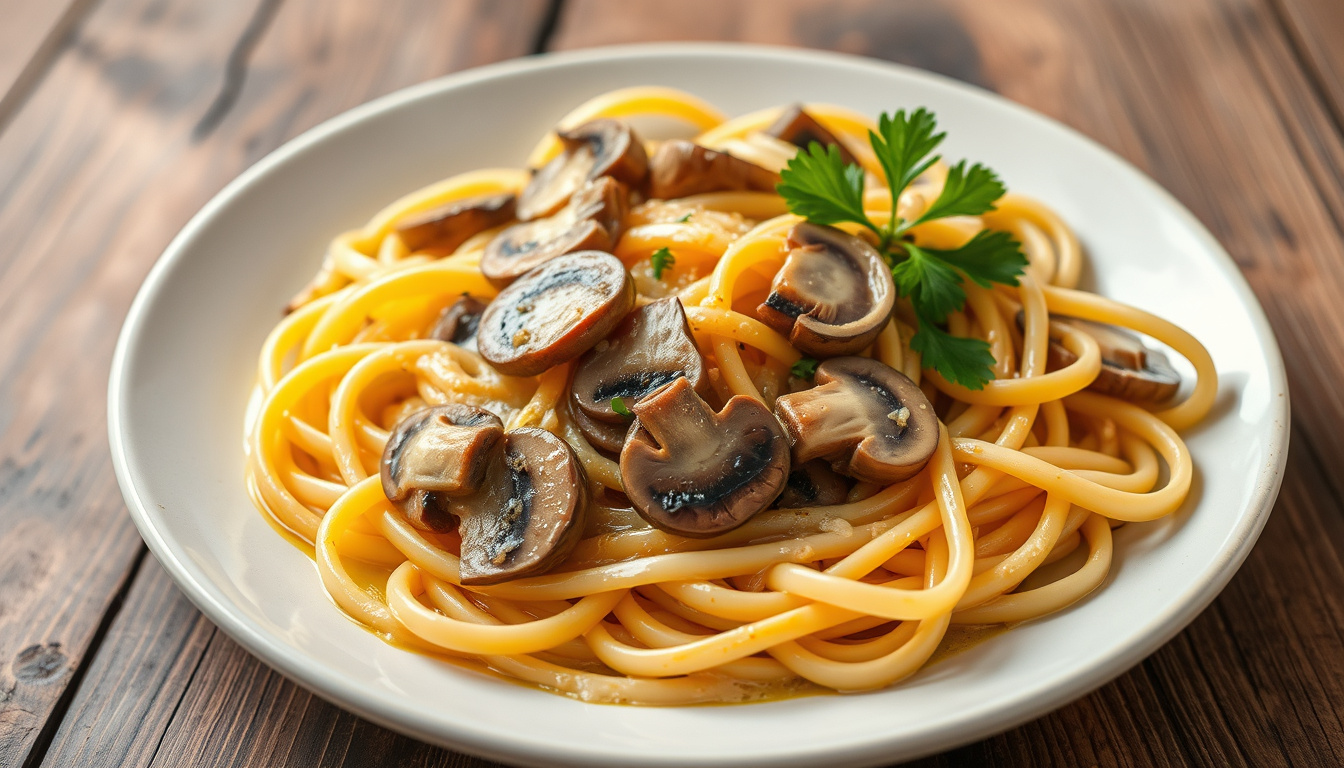
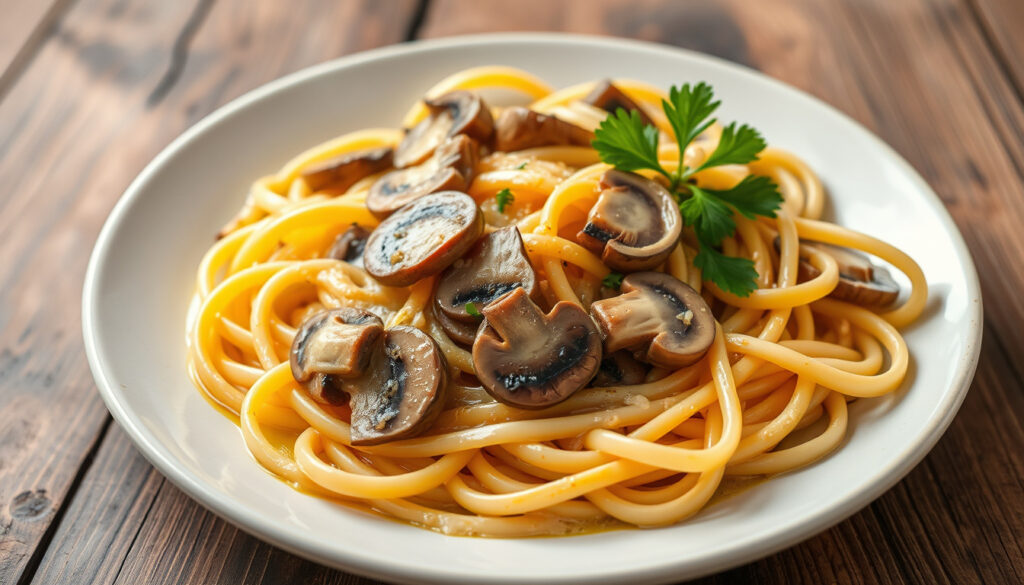
Few weeknight dinners land as reliably as a bowl of pasta bathed in creamy garlic mushrooms. It’s the kind of dish that earns permanent rotation in any household, yet many home cooks assume they need heavy cream or white wine to pull it off. They don’t. This guide walks through five different approaches to creamy mushroom pasta, each tested by recipe developers who’ve already figured out what works — and what doesn’t.
Prep Time: 10 minutes · Cook Time: 25 minutes · Total Time: 30 minutes · Servings: 6 · Key Ingredient: mushrooms
Quick snapshot
- Ready in 30 minutes (Two Spoons)
- Simple garlic mushrooms (Laura Fuentes)
- Parmesan sauce (Casually Peckish)
- Exact calorie counts across all variants
- Step-by-step video timestamps
- Allergen-free adaptations beyond vegan
- Be Inspired pasta water method documented pre-2026 (Be Inspired)
- Walder Wellness miso variant released pre-2026 (Walder Wellness)
- Mainstream restaurant menus adding no-cream variants
- Increased demand for plant-based pasta sauces
These attributes define the recipe framework across most tested variations.
| Attribute | Value |
|---|---|
| Origin | Italian-inspired comfort dish |
| Key Flavor | Garlic butter mushrooms |
| Common Pasta | Tagliatelle or penne |
| Calories per Serving | 500 approx |
Easy creamy mushroom pasta
The quickest route to creamy mushroom pasta relies on pantry staples and a solid technique. According to Casually Peckish (recipe development blog), the key is building flavor in layers: sauté aromatics first, then mushrooms until they release their liquid and brown, and finish with a bechamel-style sauce made from butter, flour, and milk. The result is a 35-minute meal for six servings that keeps things simple without sacrificing richness.
Ingredients for quick version
Five ingredients form the backbone of the easiest creamy mushroom pasta:
- 400g Swiss or brown mushrooms, sliced thickly (Casually Peckish)
- Butter, garlic, shallots as aromatics (Two Spoons)
- Milk-based sauce thickened with flour roux
- Parmesan cheese for finishing and silkiness
- Fresh herbs like parsley or basil for brightness
Step-by-step instructions
The Laura Fuentes method skips heavy cream entirely, relying instead on reserved pasta water to emulsify the sauce. As she explains, the starchy water binds with butter and cheese to create a creamy coating without any dairy beyond milk and parmesan. This technique works in under 30 minutes and produces a silky result that clings to every strand.
The emulsification trick works because pasta water contains starch that stabilizes fat droplets — the same principle behind classic Italian cacio e pepe.
Tips for beginners
Maplewood Road’s recipe developer emphasizes that mushrooms must be sautéed until browned, not just softened. The Maillard reaction builds the depth that makes the sauce taste complete rather than thin. Don’t crowd the pan — working in batches if needed ensures proper browning.
What this means: mastering one of these two techniques opens the door to all the variations that follow.
Creamy mushroom pasta without cream
Heavy cream is traditional, but it’s far from necessary. Multiple recipe developers have found alternatives that deliver comparable richness without the dairy load or extra calories.
Milk or alternative substitutes
Casually Peckish demonstrates that a bechamel sauce — butter, flour, milk, and stock — creates creaminess without cream. The flour roux thickens the milk into a sauce that behaves identically to heavy cream in the pan. For vegan versions, coconut milk provides body, while oat milk bechamel offers a neutral flavor profile that lets mushrooms shine.
Thickening techniques
The pasta water method from Be Inspired relies on starch rather than fat. As the recipe notes, the starchy water emulsifies with butter and cheese to create a glossy, clingy sauce. This approach requires no thickening agents beyond what’s already in the pot — save at least a cup of pasta water before draining.
Bechamel-based sauces are measurably lower in calories than cream versions, according to Casually Peckish.
Flavor adjustments
Walder Wellness takes a different route with miso paste. The fermented ingredient adds umami depth that substitutes for the richness typically provided by cream or cheese. This approach works for dairy-free and alcohol-free versions simultaneously, making it one of the most adaptable base sauces available.
The implication: choosing the right substitute depends on your dietary needs and how much time you have for prep.
Creamy mushroom pasta without wine
White wine deglazes pans and adds acidity in many classic recipes, but it isn’t required. Several alcohol-free techniques achieve the same flavor balance using pantry staples.
Alcohol-free substitutes
Be Inspired recommends white wine alternatives like chicken or vegetable broth combined with a splash of lemon juice. The acid mimics wine’s brightening effect while the broth adds body. This substitution works seamlessly in the pasta water emulsification method.
Broth or stock options
Broth alone can replace wine’s volume in the pan. Maplewood Road suggests using stock as the deglazing liquid when fond (the browned bits) forms on the pan bottom. The fond contains concentrated flavor that dissolves into the liquid, building complexity without wine’s alcohol.
Maintaining richness
Without wine, maintaining richness falls to butter, cheese, and the sauce base itself. Casually Peckish adds lemon juice alongside the bechamel to provide the brightness that wine would typically contribute.Dijon mustard and tomato paste also build complex flavor layers, as Maplewood Road demonstrates in their emulsification method.
The catch: omitting wine shifts the acidity profile, so compensating with citrus or fermented condiments becomes essential for balance.
Creamy mushroom pasta, chicken
Adding chicken transforms this dish from a vegetarian staple into a complete protein-forward dinner. The integration is straightforward, but timing and cooking sequence matter.
Adding chicken
Chicken breast or thigh can be cooked separately and sliced, or started in the pan before mushrooms. The latter approach — browning chicken first, setting it aside, then building the mushroom sauce around it — allows the fond from chicken to flavor the entire dish. This method from Kitchen Sanctuary (weeknight recipe specialist) keeps things streamlined.
Cooking sequence
The recommended sequence: season and sear chicken, remove and rest, sauté mushrooms in the same pan, build sauce, add pasta and emulsify, then return chicken to the pan for a final toss. This ensures chicken stays juicy while mushrooms develop proper color.
Adding chicken increases protein but also adds cooking time. Weeknight versions benefit from pre-cooked rotisserie chicken or thin-cutlets that finish in the sauce.
Protein boost
The balance works well because mushrooms and chicken share similar savory flavor profiles. According to Maplewood Road, the umami from mushrooms complements chicken without either dominating. For vegetarian readers wanting a similar protein boost, white beans or cannellini integrate well into the creamy sauce.
The pattern: protein additions work best when introduced at strategic points rather than cooked throughout the sauce.
Creamy mushroom pasta ingredients
Understanding each ingredient’s role helps home cooks improvise confidently. The components fall into three categories: aromatics, mushrooms, and sauce builders.
Core pantry staples
Every variation starts with butter, garlic, and shallots as the flavor foundation. Two Spoons notes that shallots and garlic appear across virtually all recipes because they provide the savory base that mushrooms build upon. No recipe skips these entirely.
Mushroom varieties
Maplewood Road recommends a mix of cremini, shiitake, and portobello — roughly 12 ounces total — for depth. Cremini provide earthy base notes, shiitake add chew and umami, and portobello contribute meatiness. White button mushrooms work in a pinch but lack the complexity of darker varieties.
Cheese and sauce basics
Parmesan cheese is nearly universal for finishing, even in lighter recipes. Maplewood Road notes that real parmesan — not pre-grated containers — melts smoothly and adds silkiness. For dairy-free versions, nutritional yeast or vegan parmesan alternatives provide similar function.
The implication: once you grasp the core framework, adapting the recipe to any dietary preference becomes a matter of substitution rather than reinvention.
Step-by-step instructions
These instructions follow the pasta water emulsification method, which works without cream, wine, or advanced technique. Based on testing from Be Inspired and verified by Laura Fuentes.
- Cook pasta: Boil pasta in salted water until al dente. Reserve 1 cup pasta water before draining — this is the secret sauce ingredient.
- Sauté aromatics: Melt butter in a wide pan over medium heat. Add minced shallots and garlic, cook until fragrant, about 1 minute.
- Brown mushrooms: Add sliced mushrooms in a single layer. Cook without stirring for 3-4 minutes, then stir and continue until deeply browned, 8-10 minutes total. Season with salt and pepper.
- Build sauce: Add a splash of broth or stock, scraping up any fond. Reduce heat to low and stir in butter chunks and parmesan. Toss vigorously as it melts.
- Emulsify: Add drained pasta to the pan. Add pasta water gradually — a few tablespoons at a time — tossing constantly until sauce coats every strand and glossy.
- Finish: Add lemon juice, fresh herbs, and a final pinch of parmesan. Adjust seasoning and serve immediately.
Pasta water is the variable — older pots of water with high starch content emulsify more easily. If sauce breaks, add cold butter off heat and toss rapidly to re-bind.
“The secret to making creamy mushroom pasta without cream is to add some pasta cooking water.”
— Be Inspired (recipe development blog)
“An earthy, silky, creamy, satisfying pasta dish that — you’d never know — doesn’t use any cream.”
— Maplewood Road (food writer and recipe developer)
Upsides
- No heavy cream or wine required
- Adapts to vegan, dairy-free, and allergen-free diets
- Ready in under 35 minutes with pantry staples
- Bechamel base is lower in calories than cream versions
- Emulsification technique works for any pasta shape
Downsides
- Requires timing precision with pasta water
- Sauce can break if heat is too high
- Nutritional data varies widely across variants
- Dairy-free versions may taste noticeably different from originals
Related reading: Creamy Mushroom Pasta Without Cream · Healthy Creamy Mushroom Pasta
Frequently asked questions
What mushrooms work best for creamy mushroom pasta?
A mix of cremini, shiitake, and portobello delivers the best depth. Cremini provide earthy base notes, shiitake add umami, and portobello contribute meatiness. White button mushrooms work in a pinch but lack complexity.
Can creamy mushroom pasta be made gluten-free?
Yes — substitute regular pasta with a gluten-free variety. The sauce techniques (bechamel or pasta water emulsification) work with gluten-free pasta without modification. Just ensure the thickening roux uses a gluten-free flour blend.
How do you store leftover creamy mushroom pasta?
Store in an airtight container in the refrigerator for up to 3 days. Reheat gently in a pan with a splash of broth or water, tossing to restore moisture. The sauce may tighten — pasta water or broth fixes this on the reheat.
Is creamy mushroom pasta kid-friendly?
Most children enjoy the mild, savory flavor profile. The wine-free versions are appropriate for all ages. For pickier eaters, omit chili flakes and reduce garlic to mild levels. Parmesan adds saltiness — consider this when seasoning.
What cheese substitutes for parmesan?
Vegan parmesan alternatives work in most recipes. Nutritional yeast provides similar umami without dairy. Pecorino romano offers a sharper, saltier alternative for those who tolerate sheep’s milk dairy.
How to make creamy mushroom pasta spicier?
Add chili flakes during the aromatics stage, or finish with a small drizzle of chili oil. Be Inspired includes fennel seeds and chili flakes as part of their flavor profile, demonstrating that heat integrates well with the creamy base.
Can I use dried mushrooms?
Dried porcini or shiitake rehydrate in warm water and add concentrated umami to the sauce. Use the soaking liquid as part of your cooking liquid for maximum flavor. Add rehydrated mushrooms during the sauté stage, adjusting cooking time since they’re already cooked through.
For home cooks navigating dietary restrictions, the choice between these approaches is straightforward: want a lighter calorie count? Use bechamel. Need dairy-free? Choose miso paste or coconut milk. Want the simplest technique? Master the pasta water emulsification method — it works with whatever is in the pantry.

Andrew Ellis leads fact-checking, source verification and corrections at Australia Focus.