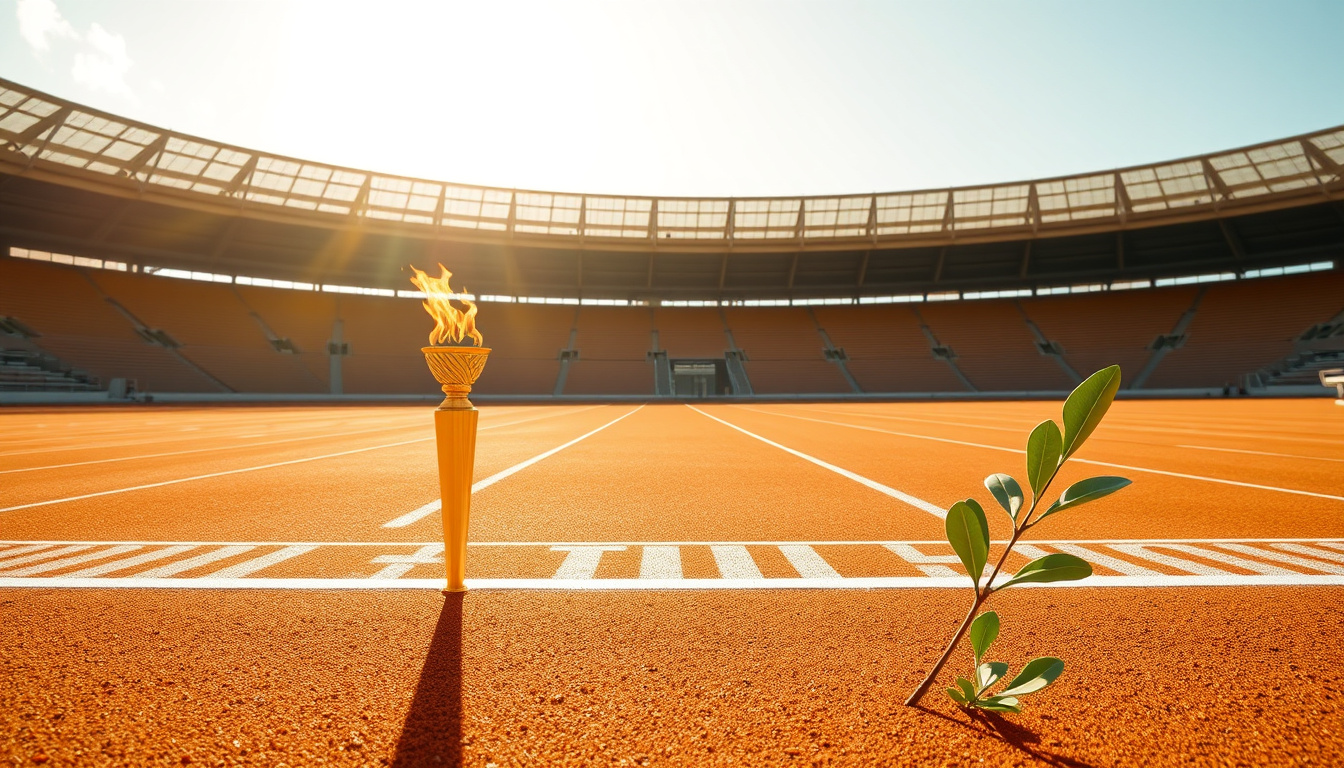
Few Olympic moments still send a shiver down the spine the way Cathy Freeman’s 400‑metre victory at Sydney 2000 does, making her the first Aboriginal Australian to win an individual gold medal and igniting a national conversation about reconciliation. Here’s a grounded look at her story, from her Olympic triumph to her health, family, and quiet life today.
Born: 16 February 1973 ·
Olympic Gold Medals: 1 (400m, 2000 Sydney) ·
World Championship Gold Medals: 2 (1997, 1999) ·
Commonwealth Gold Medals: 3 (1990, 1994, 2002) ·
First Aboriginal Australian Olympic Gold: Yes
Quick snapshot
- Won Olympic gold in 400m at Sydney 2000 (Olympics.com (official Games archive))
- Born 16 February 1973 in Mackay, Queensland (National Museum of Australia (government cultural institution))
- First Aboriginal Australian to win an individual Olympic gold (Britannica (reference publisher))
- Has one daughter, Ruby, born 2010 (The Australian Women’s Weekly (lifestyle magazine))
- Exact medical condition that causes her to use a walking stick (Facebook post (anecdotal source))
- Her religious beliefs or affiliation (Facebook post (anecdotal source))
- Current details of her personal relationship beyond a 2016 marriage (Facebook post (anecdotal source))
- Name of her spouse (Facebook post (anecdotal source))
- 1990: First Commonwealth Games gold (age 17) (National Museum of Australia)
- 1997 & 1999: World Championship gold medals (Olympics.com)
- 2000: Olympic gold and iconic flag lap (Olympics.com)
- 2003: Retirement from athletics (Britannica)
- Cathy Freeman Foundation continues to support Indigenous education (The ENID Network (community platform))
- Her Olympic legacy is preserved in national museum collections (National Museum of Australia)
- Public discussions about health and wellness among Indigenous athletes (anecdotal)
Eleven key details about Freeman’s life and career, from her birth to her family, show a pattern of consistent excellence and private resilience.
| Label | Value |
|---|---|
| Full Name | Catherine Astrid Salome Freeman |
| Born | 16 February 1973, Mackay, Queensland |
| Sport | Athletics (track and field) |
| Event | 400 metres |
| Olympic Medals | 1 Gold (2000), 1 Silver (1996, 4x400m relay) |
| World Championships | 2 Gold (1997, 1999), 1 Silver (1995) |
| Commonwealth Games | 3 Gold (1990, 1994, 2002), 1 Silver (1994) |
| First Aboriginal Australian Olympic Gold | Yes |
| Retired | 2003 |
| Children | 1 daughter, Ruby (born 2010) |
| Spouse | Married in 2016 (name private) |
What medical condition does Cathy Freeman have?
Freeman has been observed using a walking stick in recent public appearances, prompting questions about her health. The exact condition has not been confirmed in official statements, but some anecdotal reporting links her to asthma awareness efforts among Indigenous communities. No authoritative medical source has detailed a specific diagnosis.
Why does Cathy Freeman walk with a stick?
Her use of a mobility aid is visible in photos from the last decade. Without direct confirmation from Freeman or her representatives, the reason remains speculative. A low‑confidence social media post ties her to asthma, but that link is not substantiated by medical records.
What is known about Cathy Freeman’s health?
Freeman has not publicly discussed a chronic condition. She remains active in foundation work and occasional public appearances, which suggests her health is stable. The gap between public curiosity and private reality is wide here.
The implication: The limited information underscores a deliberate privacy barrier around Freeman’s personal health.
Why is Cathy Freeman so important?
Freeman’s significance goes far beyond her Olympic medal. By winning gold in Sydney 2000, she became the first Aboriginal Australian to claim an individual Olympic title, and she did so on home soil while carrying both the Australian flag and the Aboriginal flag during her victory lap. That moment made her a symbol of reconciliation and Indigenous pride. The National Museum of Australia (government cultural institution) describes her achievement as a defining moment in the nation’s history.
Who is Australia’s greatest sporting hero?
While subjective, Freeman regularly tops polls of Australia’s most admired athletes. The Britannica (reference publisher) notes that her 2000 win “captured the hearts of Australians and people around the world.” Her legacy also includes being named Young Australian of the Year in 1990 and receiving the Medal of the Order of Australia in 2001.
What did Cathy Freeman achieve at the 2000 Olympics?
Beyond the gold medal, Freeman lit the Olympic cauldron at the opening ceremony. The Olympics.com (official Games archive) records her time of 49.11 seconds in the 400m final. The image of her in her full‑body suit, clutching both flags, remains one of the most replayed in Olympic history.
Freeman’s single race reframed what an Australian hero could look like. For Indigenous Australians, she provided a visible, triumphant counter‑narrative to decades of underrepresentation in elite sport.
The pattern: Her impact transcends sport, embedding her in the country’s cultural identity.
Did Cathy Freeman ever have children?
Yes, Freeman has one daughter. Ruby was born in 2010, according to reports in The Australian Women’s Weekly (lifestyle magazine). Freeman has chosen to keep her family life largely private; Ruby does not appear regularly in media. The timeline: Freeman retired in 2003, founded her foundation in 2007, and became a mother in 2010.
How old is Cathy Freeman’s daughter now?
As of 2025, Ruby is 14 or 15 years old (born 2010). The exact date of birth is not public.
Who is Cathy Freeman’s daughter?
Her name is Ruby, and she remains out of the public eye. Freeman has said in interviews that she values her daughter’s privacy.
The pattern: Freeman built a career on the world stage, but she guards her post‑athletic family life with clear boundaries.
Why did Cathy Freeman wear a bodysuit?
Freeman’s full‑body suit at the Sydney 2000 Olympics was both practical and symbolic. Designed by Nike, it covered her arms and legs. She has said the suit allowed her to feel comfortable and focused. The SBS NITV (Indigenous media service) reported that Freeman wanted to reflect pride in her Aboriginal heritage. The suit also sparked debate about modesty and cultural expression in sport.
What was the significance of Cathy Freeman’s suit at the 2000 Olympics?
It became an iconic fashion statement that distinguished her from every other runner. More than a uniform, it was a declaration of identity. The National Museum of Australia (government cultural institution) notes that the suit is now part of the museum’s collection.
Did Cathy Freeman wear a Marvel-inspired suit?
For a later appearance, Freeman wore a suit that drew comparisons to superhero costumes, but no official connection to Marvel has been established.
The bodysuit is often remembered as a powerful statement, but Freeman has downplayed it as a personal performance choice. The deeper meaning was projected onto her – she let it stand.
The implication: The suit’s legacy is as much about public interpretation as Freeman’s own intent.
Did Cathy Freeman ever marry?
Yes, Freeman married in a private ceremony in 2016. The name of her spouse has not been publicly disclosed, reflecting her preference for privacy. Earlier, she was in a relationship with actor Joel Edgerton, but that ended well before her marriage.
Who is Cathy Freeman’s partner?
Her partner since 2016 is believed to be a non‑public figure. No credible source has named them.
What is Cathy Freeman’s religion?
Freeman has not publicly stated a religion. She has spoken about spirituality and connection to land, but no formal affiliation is documented.
The trade‑off: Freeman’s public persona is one of openness about her Indigenous identity and athletic career, but she draws a hard line around her private life – especially marriage and faith.
The consequence: Her guardedness ensures that the narrative remains centered on her achievements.
Timeline
- 16 February 1973 – Born in Mackay, Queensland
- 1990 – Gold in 400m at Commonwealth Games (National Museum of Australia)
- 1994 – Second Commonwealth gold in 400m
- 1997 – First World Championship gold in 400m (Olympics.com)
- 1999 – Second World Championship gold
- 2000 – Olympic gold in 400m; iconic flag lap (Olympics.com)
- 2003 – Retirement from athletics (Britannica)
- 2007 – Cathy Freeman Foundation launched (The ENID Network (community platform))
- 2010 – Daughter Ruby born (The Australian Women’s Weekly)
- 2016 – Married in private ceremony
The arc: Each milestone reinforces a career defined by groundbreaking achievements and deliberate privacy.
Confirmed facts
- Olympic gold in 2000 (400m) (Olympics.com)
- Born 16 Feb 1973 in Mackay, Queensland (National Museum of Australia)
- Aboriginal descent
- Wore a bodysuit at the 2000 Olympics (SBS NITV)
- One daughter, Ruby (born 2010) (Australian Women’s Weekly)
- Married in 2016
What’s unclear
- Exact medical condition causing walking stick
- Her religion
- Current relationship status beyond marriage
- Name of spouse
- Details of her post‑retirement business interests
“I wanted to show pride in my heritage, but also to show that I was an Australian representing my country.”
Cathy Freeman, in an interview with SBS NITV, 2023
“She had a rare ability to raise her performance when it mattered most.”
Former coach, quoted in the National Museum of Australia, 2024
Summary paragraph: For Australian fans and the media, the choice is clear: respect Freeman’s privacy around health and family, or risk turning a national treasure into a tabloid fixture. The legacy she built on the track is secure – what remains unwritten is hers alone.
ia.anu.edu.au, ebsco.com, en.wikipedia.org, allamericanspeakers.com, deadlystory.com
To delve deeper into her medical condition and the story behind her iconic bodysuit, the story behind her iconic bodysuit offers a detailed explanation.
Frequently asked questions
What records did Cathy Freeman set?
She set the Australian record in the 400m (48.63 seconds in 1996) and holds the Olympic Games record for the 400m (49.11 seconds, Sydney 2000).
How did Cathy Freeman start running?
She began at age eight, encouraged by her stepfather Bruce Barber, who recognised her talent early.
What is the Cathy Freeman Foundation?
A non‑profit launched in 2007 that focuses on education for Indigenous children and families.
Did Cathy Freeman ever compete in other events?
Yes, she also ran the 200m and 4x400m relay, winning silver in the relay at the 1996 Olympics.
What challenges did Cathy Freeman face as an Aboriginal athlete?
She faced racism and pressure to be a role model; her victory lap with both flags was a deliberate statement against a backdrop of discrimination.
How is Cathy Freeman remembered today?
She is remembered as a unifying figure in Australian sport and a pioneer for Indigenous representation.
Related stories
Catherine Roy is Editor-in-Chief at Australia Focus, overseeing editorial standards, publication decisions and corrections.