There’s something quietly satisfying about a breakfast that prepares itself: overnight oats have become a morning staple for millions who want a no-fuss, healthy start. This cuts through the confusion with the precise formula from top-rated recipes, common pitfalls to avoid, and a clear look at whether this trend lives up to its health reputation.
Base ratio: 1 part oats to 1 part liquid (milk or yogurt) ·
Minimum soak time: 4 hours (overnight ideal) ·
Typical calories per serving: ~300 kcal ·
Average protein (with milk): 10-15 g per serving ·
Fiber per serving: 5-8 g (with chia seeds added)
Quick snapshot
- 1/2 cup rolled oats (Source: Feel Good Foodie)
- 1/2 cup milk of choice (Source: Feel Good Foodie)
- 1 tbsp chia seeds (optional) (Source: Feel Good Foodie)
- 1 tsp maple syrup or honey (Source: Feel Good Foodie)
- Pinch of salt (Source: Feel Good Foodie)
Source: Feel Good Foodie
- 1/2 cup rolled oats (Source: Fit Foodie Finds)
- 1/3 cup milk (Source: Fit Foodie Finds)
- 1/3 cup Greek yogurt (Source: Fit Foodie Finds)
- 1 scoop protein powder (optional) (Source: Fit Foodie Finds)
- 1 tbsp chia seeds (Source: Fit Foodie Finds)
Source: Fit Foodie Finds
- 1/2 cup rolled oats (Source: Budget Bytes)
- 1/2 cup unsweetened almond milk (Source: Budget Bytes)
- 1 tbsp ground flaxseed (Source: Budget Bytes)
- Berries for sweetness (Source: Budget Bytes)
- No added sugar (Source: Budget Bytes)
Source: Budget Bytes
- 1/2 cup rolled oats (Source: Love and Lemons)
- 1/4 cup milk (Source: Love and Lemons)
- 1/4 cup Greek yogurt (Source: Love and Lemons)
- 1 tbsp chia seeds (Source: Love and Lemons)
- 1 tsp vanilla extract (Source: Love and Lemons)
Source: Love and Lemons
Five key parameters shape every overnight oats decision:
| Parameter | Value |
|---|---|
| Soaking time | 4–12 hours in refrigerator |
| Best oat type | Rolled oats (old-fashioned) |
| Liquid-to-oats ratio | 1:1 (can adjust for texture) |
| Common add-ins | Chia seeds, yogurt, fruit, nuts, sweeteners |
| Storage life | Up to 5 days in an airtight container |
Are Overnight Oats Actually Healthy?
Nutritional profile of overnight oats
- Base ingredients: rolled oats + milk provide complex carbs, protein, and calcium. Feel Good Foodie (popular recipe blog) notes that the base can be adapted for different diets.
- With chia seeds: adds fiber, omega-3s, and thickens naturally. Love and Lemons (trusted food blog) includes chia in its recommended recipe.
- With Greek yogurt: boosts protein to 15–20 g per serving. Fit Foodie Finds (recipe blog) uses yogurt in its base recipe.
Potential health benefits
The soluble fiber in rolled oats (Wikipedia: beta-glucan) has been linked to lower LDL cholesterol. Soaking oats may also reduce phytic acid, which can improve mineral absorption — though direct comparative studies are lacking. The controlled portion size of a jar makes it easier to avoid overeating compared to a bowl of hot oatmeal.
For someone watching sugar, overnight oats can be a strong breakfast choice — as long as sweeteners stay measured. The flexibility means you can tailor macros to your goals.
Potential downsides and how to mitigate them
- Added sugar: many recipes call for maple syrup or honey. Budget Bytes (budget-friendly recipe site) uses brown sugar; you can reduce or swap for fruit.
- Calorie density: nut butters, seeds, and dried fruit add up. The Weight Loss Friendly variation in the snapshot uses no added sugar and berries for sweetness.
What Is the Formula for Overnight Oats?
The classic 1:1 ratio
The most widely recommended ratio is 1 part rolled oats to 1 part liquid. Feel Good Foodie says this yields a soft but not mushy texture. Budget Bytes calls the 1:1 ratio a reliable starting point. For a thicker result, Healthy Life Trainer (fitness-oriented recipe site) uses 1 part liquid to 2 parts oats.
Variations with yogurt or chia seeds
- With yogurt: use 1/2 cup milk + 1/2 cup Greek yogurt per 1/2 cup oats. Fit Foodie Finds combines 1 cup oats, 1 cup milk, 1/2 cup yogurt.
- With chia seeds: add 1 tbsp chia per 1/2 cup oats, then increase liquid by 2–3 tbsp. Love and Lemons recommends 1/2 cup oats to 2/3 cup milk to 1 tbsp chia.
Adjusting for texture and consistency
- If too thick after soaking: stir in extra milk, 1 tbsp at a time (Fit Foodie Finds).
- If too thin: add more oats or chia and let sit 30 minutes (Feel Good Foodie).
- Elizabeth Rider (holistic nutrition blogger) advises leaving a 1/2-inch gap in the jar for expansion.
What Are Common Mistakes to Avoid?
Using the wrong oat type
Rolled oats (old-fashioned) are the only oat that works. Feel Good Foodie warns that steel-cut oats will remain hard and chewy without cooking. Instant oats turn mushy. Stick with rolled oats for a tender bite.
Skipping the salt or sweetener
A pinch of salt enhances the oat flavor — Budget Bytes includes it in its base recipe. Without a small amount of sweetener (1–2 tsp), the oats can taste flat.
Not letting them soak long enough
- Minimum soak: 2 hours, but Feel Good Foodie and Fit Foodie Finds both say overnight (8–12 hours) is optimal.
- Elizabeth Rider recommends at least 6–8 hours for best texture.
Overfilling the jar
Oats and chia seeds expand as they absorb liquid. Elizabeth Rider says to leave about 1 inch of headspace. Love and Lemons also warns against filling to the brim.
The most common fixable mistake: using too much liquid. Start with 1:1, then adjust. Chia seeds absorb more, so factor that in.
What Is the Best Way to Make Overnight Oats?
- Step 1: In a jar or bowl, combine 1/2 cup rolled oats, 1/2 cup milk (or 1/4 cup milk + 1/4 cup yogurt), 1 tbsp chia seeds (optional), 1 tsp sweetener, and a pinch of salt.
- Step 2: Stir well until all oats are submerged. Budget Bytes advises stirring especially well to break up chia clumps.
- Step 3: Seal and refrigerate for at least 4 hours, preferably overnight (8–12 hours).
- Step 4: In the morning, stir again. If too thick, add a splash of milk. Add toppings: fruit, nuts, yogurt.
Tips for creaminess and flavor
- Use whole milk or oat milk for a richer texture (Feel Good Foodie).
- Add yogurt for creaminess and protein boost (Fit Foodie Finds).
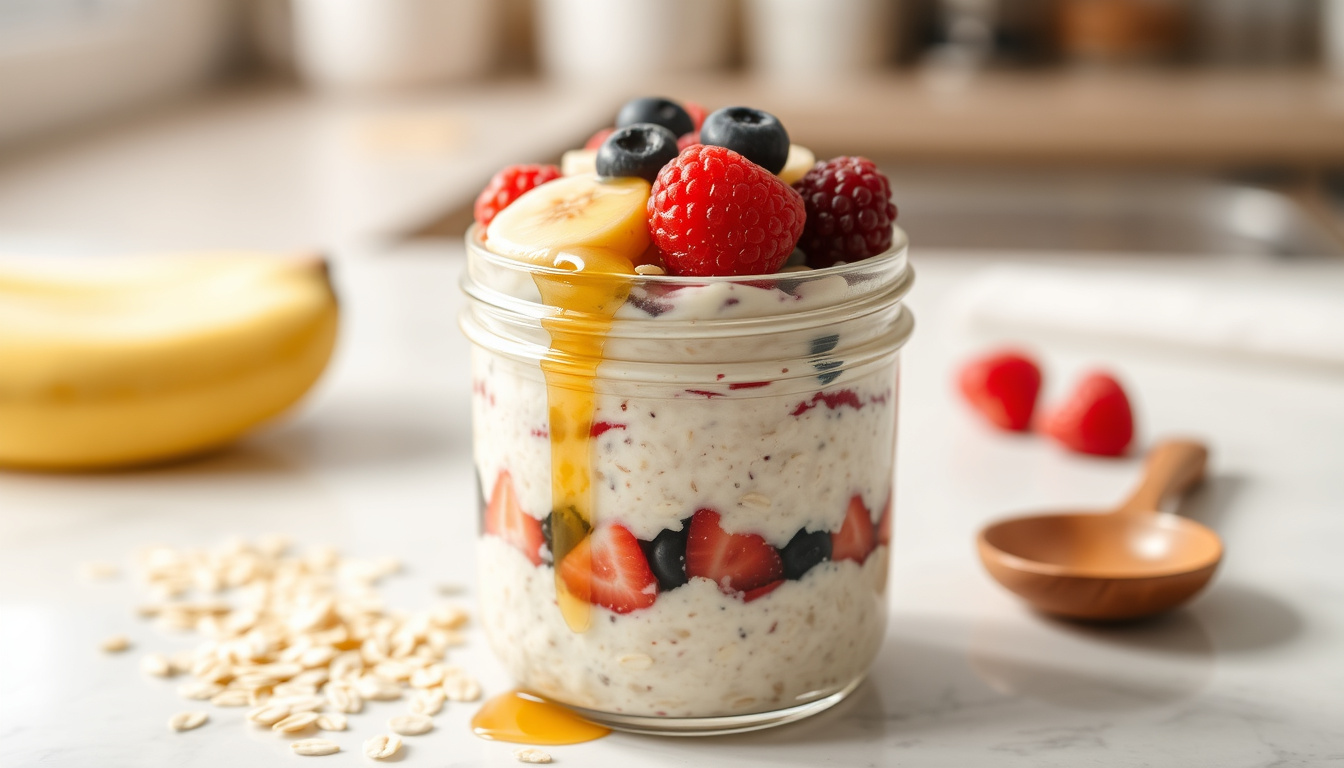
- Layer ingredients in the jar rather than mixing everything — Elizabeth Rider layers oats, nut butter, and fruit for visual appeal and flavor bursts.
How to vary the base
- High protein: replace half the liquid with Greek yogurt and add protein powder.
- Low sugar: use unsweetened almond milk and skip sweetener, sweeten with mashed banana or berries.
- Dairy-free: use coconut or oat milk and skip yogurt or use plant-based yogurt.
A consistent base recipe means you can meal-prep five jars on Sunday and eat a different flavor each morning — as long as you nail the ratio first.
What Not to Put in Overnight Oats?
Ingredients that ruin texture
- Steel-cut oats – they won’t soften enough without cooking (Healthy Life Trainer).
- Too much liquid – the ratio must be respected. Budget Bytes calls a 1:1 ratio the “reliable starting point” for a reason.
- Large hard seeds (e.g., whole flaxseeds) – they won’t soften; use ground flax instead.
Ingredients that spoil quickly
Fresh citrus juice or acidic fruits can curdle milk if left overnight. Feel Good Foodie recommends adding berries in the morning, not at the start. Also avoid adding raw egg or unpasteurized ingredients meant for immediate consumption.
Allergen considerations
- Gluten: oats are often contaminated with wheat. Use certified gluten-free rolled oats for celiac-safe overnight oats.
- Dairy: swap milk for plant-based alternatives and yogurt for coconut or soy yogurt.
- Tree nuts: use seed butters (sunflower, tahini) instead of almond butter.
Avoiding acidic fruits overnight means sacrificing a tangy flavor — but adding them in the morning preserves both texture and freshness.
Upsides
- No-cook preparation saves morning time.
- High in fiber and protein when made with milk and chia.
- Easy portion control with jar sizes.
- Stays fresh in fridge for up to 5 days (Love and Lemons).
Downsides
- Requires advance planning (4+ hours soaking).
- Texture can be slimy if ratio is off.
- Risk of high added sugar if not careful.
- Cold temperature not to everyone’s liking (though you can reheat).
What’s Unclear and What We Know for Sure
Confirmed facts
- Rolled oats are a good source of soluble fiber (beta-glucan), which can lower cholesterol.
- Soaking oats reduces phytic acid, potentially improving mineral absorption.
- Overnight oats can be part of a healthy diet when made with nutrient-dense ingredients.
What’s unclear
- Whether overnight oats are significantly healthier than cooked oatmeal – no direct comparative studies exist.
- If long-term daily consumption of cold-soaked oats has any unique health drawbacks.
- Whether the reduction in phytic acid from soaking is significant enough to affect mineral absorption in a typical diet remains unstudied.
“The base recipe is endlessly adaptable — use whatever milk and sweetener you have on hand. The key is getting the ratio right.”
— Love and Lemons (trusted food blog)
“We love overnight oats because they’re a healthy, no-cook breakfast that you can prep in advance.”
— Feel Good Foodie (popular recipe blog)
For anyone standing in front of their pantry at 10 p.m. wondering what tomorrow’s breakfast will be, the formula is clear: 1 part rolled oats, 1 part liquid, a pinch of salt, and your choice of add-ins. The rest is customization. For the busy home cook, the decision is simple: prep it tonight, or grab a bowl of cereal in the morning. One gives you control over nutrition and taste; the other, convenience. Choose accordingly.
For a deeper dive into the perfect ratio and common pitfalls, see our detailed guide to overnight oats.
Frequently asked questions
Can I use steel-cut oats for overnight oats?
Steel-cut oats are too dense to soften without cooking. Rolled oats are the best choice. If you want a chewier texture, you can par-cook steel-cut oats first, but that defeats the no-cook convenience.
How long can I store overnight oats in the fridge?
Up to 5 days in an airtight container (Love and Lemons). After that, the texture declines and flavors may become muted.
Can I eat overnight oats cold?
Yes, most people eat them cold straight from the fridge. If you prefer a warm breakfast, you can microwave them for 30–60 seconds.
Do I need to add chia seeds?
No, but they add fiber, omega-3s, and help thicken the mixture. If you skip chia, reduce the liquid slightly to avoid a soupy result.
Can I make overnight oats without milk?
Yes, use water, but the result will be less creamy. For a better texture, use a plant-based milk (almond, oat, soy) or even yogurt thinned with water.
Are overnight oats gluten-free?
Oats themselves are gluten-free, but many brands are cross-contaminated. Look for certified gluten-free rolled oats if you have celiac disease or sensitivity.
How many calories are in a typical serving?
A standard serving (1/2 cup oats + 1/2 cup milk + 1 tsp sweetener) contains about 300 kcal. Adding yogurt, nut butter, or seeds increases the count.
Can I reheat overnight oats?
Yes, microwave in 30-second increments, stirring in between. Add a splash of milk to restore creaminess. Reheating works best for plain or slightly sweetened versions.

Jessica Cooper covers culture, lifestyle and society across Australia for Australia Focus.